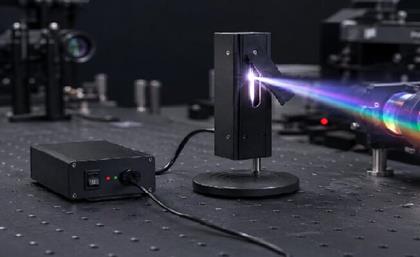
A deuterium lamp is a gas-discharge UV light source that uses low-pressure deuterium gas to generate a stable and continuous ultraviolet spectrum. It is widely used in UV-Vis spectrophotometers, HPLC detectors, absorbance measurement, water quality analysis and other analytical instruments that require reliable UV output. A typical deuterium lamp emits strong UV light below 400 nm, making it more suitable for ultraviolet spectroscopy than tungsten halogen lamps.
Are you troubled by unstable UV measurements? The issue might lie with your light source. Deuterium lamps provide strong, continuous ultraviolet light that most other sources cannot achieve, precisely solving this problem. Deuterium lamp sources operate by creating an electrical discharge in low-pressure deuterium gas. This excites the deuterium molecules, causing them to emit a continuous UV spectrum in the range of 190-400 nm. Understanding this fundamental principle is just the beginning. Let's dive deeper into the processes happening inside the lamp and why deuterium is crucial to this process.
What Is a Deuterium Lamp?
A deuterium lamp, also called a D₂ lamp, is a UV light source that generates light through electrical discharge in deuterium gas. Unlike tungsten halogen lamps that produce light through thermal radiation, a deuterium lamp produces strong ultraviolet output through molecular emission. This makes it especially useful for UV spectroscopy, absorbance measurement and analytical instruments requiring stable UV intensity.
Deuterium lamps are commonly used when the measurement wavelength is in the ultraviolet region, especially below 400 nm. They are often paired with tungsten halogen lamps in UV-Vis instruments to cover both UV and visible-near infrared ranges.
Deuterium Lamp vs Tungsten, Xenon and LED Light Sources
Need stable UV output where other lamps underperform? Regular light sources struggle to maintain UV stability. Deuterium lamps, using their unique physical principles, can maintain consistent light intensity. Unlike conventional sources, deuterium lamps utilize molecular emission rather than thermal radiation. In the UV region, they provide a more stable and intense continuous UV spectrum compared to tungsten or xenon lamps.
Fundamental Differences in Design and Operation
The working principle of a deuterium lamp is entirely different from regular light sources. In collaborating with various spectroscopy clients at Boyuan Technology, I have witnessed firsthand how these differences impact practical applications.
| Type of Light Source | Primary Mechanism | UV Output Stability | Spectral Range |
| Deuterium Lamp | Molecular Emission | Excellent (after warm-up) | 190-400 nm UV |
| Tungsten Halogen Lamp | Thermal Radiation | Good (varies with temperature) | 350-2500 nm Visible-Near Infrared |
| Xenon Arc Lamp | Plasma Discharge | Medium (requires stabilization) | 190-2500 nm UV-Visible-Near Infrared |
| LED Light Source | Semiconductor Emission | Excellent (instant on/off) | Limited discrete bands |
The key difference lies in the light generation mechanism. Conventional tungsten lamps generate light through thermal radiation—heating a filament until it glows. This method is inefficient for UV light generation because the filament temperature is not high enough to produce significant UV radiation. However, deuterium lamps utilize an electric discharge through deuterium gas. As electrons flow through the gas, they collide with deuterium molecules, transferring energy and exciting them to higher energy states. When these excited molecules return to lower energy states, they emit photons covering a continuous UV spectrum. This molecular emission process is fundamentally different from thermal radiation. It is more efficient for generating UV light and provides excellent stability once the lamp reaches its optimal operating temperature. The spectrum is continuous because it involves multiple rotational and vibrational energy level transitions within the deuterium molecules, producing a smooth output rather than discrete spectral lines.
Deuterium Lamp Wavelength Range and UV Spectrum
A deuterium lamp is mainly used as a UV light source because it provides strong output in the ultraviolet region. In many spectroscopy applications, the useful UV output is commonly below 400 nm, while the short-wavelength limit depends on the window material, such as UV glass, synthetic silica or MgF₂. Hamamatsu lists deuterium lamp spectral ranges with short-wavelength limits such as 185 nm, 160 nm and 115 nm, depending on the window material, with a long-wavelength side around 400 nm.
| Window Material | Typical Short-Wavelength Limit | Typical Long-Wavelength Limit | Use Case |
| UV glass | Around 185 nm | Around 400 nm | General UV spectroscopy |
| Synthetic silica | Around 160 nm | Around 400 nm | Deeper UV measurement |
| MgF₂ | Around 115 nm | Around 400 nm | Vacuum UV / short UV applications |
Deuterium Lamp Emission Spectrum Explained
The emission spectrum of a deuterium lamp is continuous in the UV region because the light is generated by molecular transitions in excited deuterium gas. When electrons collide with deuterium molecules, the molecules enter excited states and then release photons as they return to lower energy levels. These transitions create a broad and smooth ultraviolet spectrum instead of a single narrow emission line.
This continuous UV emission is why deuterium lamps are widely used in UV-Vis spectrophotometers and HPLC UV detectors. A continuous spectrum allows instruments to scan different wavelengths and measure absorbance across a wider UV range.
How Does a Deuterium Lamp Work?
Wondering why deuterium lamps require careful handling and warm-up time? The internal processes are very delicate. Understanding the lamp’s operation helps explain its requirements and limitations. Inside a deuterium lamp, an arc passes through deuterium gas between electrodes. This arc excites the deuterium molecules, and as the molecules return to lower energy states, they emit UV light. This process requires precise pressure and temperature control.
Detailed Operation Process and Components
The operation of a deuterium lamp involves carefully balanced physical processes. Based on my experience testing these lamps at Boyuan Technology, every component plays a critical role in ensuring reliable performance.
| Component | Function | Critical Requirement |
| Deuterium Gas | Emitting Medium | High purity (99.8%+), precise pressure (around 100 Pa) |
| Cathode | Electron Emission | Heated filament, appropriate work function |
| Anode | Collects Current | Effective cooling |
| Window Material | Transmits UV Light | UV-grade fused silica, proper sealing |
| Housing | Contains gas and electrodes | High-temperature stability, vacuum integrity |
The process starts by applying power to the cathode, heating it to emission temperature. Once heated, a high voltage (typically 300-500 volts) is applied between the cathode and anode, creating an arc discharge through the deuterium gas. Free electrons accelerate towards the anode, gaining kinetic energy from the electric field. These high-energy electrons collide with deuterium molecules (D₂), transferring energy and exciting the molecules to higher electronic, vibrational, and rotational energy states. The excited deuterium molecules then undergo several relaxation processes. Some molecules dissociate into atoms, while others transition between different excited states, emitting photons that cover the broad UV spectrum. Maintaining optimal gas pressure is crucial. Too high pressure leads to self-absorption, where emitted light is reabsorbed by other deuterium molecules. Too low pressure reduces collision frequency, decreasing light output. The lamp's design includes a gas reservoir to maintain stable pressure throughout the lamp's lifespan (typically 1000-2000 hours). The entire process occurs within a sealed quartz housing with a UV-transmissive window, usually made of synthetic fused silica, to ensure high transmission down to 190 nm.
What are the most common applications of deuterium lamp sources?
Choosing the wrong UV light source can compromise instrument performance. Deuterium lamps excel in applications requiring stable, continuous UV light where other sources fall short. Deuterium lamp sources are primarily used in UV-Visible spectrophotometers, high-performance liquid chromatography detectors, and analytical instruments requiring stable UV light. They provide the continuous spectrum required for accurate absorption measurements and spectral analysis.
Key Applications and Performance Requirements
Due to their unique spectral characteristics, deuterium lamps have become an indispensable part of analytical instruments.
| Application | Specific Use | Why Prefer Deuterium Lamps |
| UV-Visible Spectroscopy | Sample absorption measurements | Continuous spectrum supports full-wavelength scanning |
| HPLC Detection | Liquid chromatography UV detectors | Stable light intensity ensures precise concentration measurements |
| Water Quality Analysis | Nitrate, organic compound detection | Strong output at short UV wavelengths (200-220 nm) |
| Life Science Research | Protein/DNA quantification | High intensity at 260 nm and 280 nm absorption peaks |
In UV-Visible spectrophotometers, deuterium lamps are typically paired with tungsten halogen lamps to cover the full range of 190-1100 nm. Deuterium lamps cover the UV region (190-400 nm), while tungsten lamps cover the visible and near-infrared regions. This combination is effective because deuterium lamps provide much higher intensity in the UV region than tungsten sources, while tungsten lamps provide better stability and intensity in the visible region. For HPLC applications, the requirements are different. Most HPLC UV detectors use fixed wavelengths, usually 254 nm, but modern systems may monitor multiple wavelengths. Deuterium lamps are ideal because their continuous spectrum allows wavelength selection flexibility while maintaining the stability needed for accurate quantitative analysis. A 1% variation in light intensity can result in a 1% concentration measurement error, making light source stability absolutely crucial. In environmental monitoring, deuterium lamps can detect compounds like nitrates that absorb at short UV wavelengths (220 nm). Few other light sources can provide sufficient intensity at these wavelengths while maintaining the stability required for regulatory-compliant measurements. The continuous spectrum also allows method development and optimization without changing hardware.
How to Choose a Deuterium Lamp or Deuterium Light Source
When choosing a deuterium lamp or deuterium light source, users should not only check whether the lamp can emit UV light. The selection should also consider wavelength range, output stability, warm-up time, lamp lifetime, optical interface, power supply, size and whether the system needs visible or near-infrared output at the same time.
| Selection Factor | Why It Matters | Recommendation |
| Wavelength range | Determines whether the lamp covers the required UV measurement band | Choose UV glass, synthetic silica or MgF₂ window according to the short-wavelength requirement |
| Output stability | Affects absorbance and concentration measurement accuracy | Use a stable regulated power supply and allow sufficient warm-up time |
| Lamp lifetime | Affects replacement cost and instrument downtime | Track operating hours and prepare replacement lamps |
| UV-Vis coverage | Some systems need both UV and visible light | Choose a deuterium tungsten light source for broader spectral coverage |
| Optical interface | Determines compatibility with spectrometers or optical systems | Match the light source with fiber coupling, free-space optics or spectrometer input |
| Application | Different instruments need different configurations | Match the lamp to UV-Vis, HPLC, water quality, life science or material testing use |
For users who need a broader spectrum, a deuterium tungsten light source is often more practical than a standalone deuterium lamp because it can combine UV output from the deuterium lamp with visible and near-infrared output from the tungsten lamp.
Deuterium Lamp Lifetime, Warm-Up and Maintenance
Frustrated with deuterium lamp life or performance issues? Proper operation and maintenance significantly impact performance. Understanding practical considerations ensures optimal results and longer service life. Key practical considerations include proper warm-up time (15-30 minutes), stable power supply, correct orientation, and understanding lifetime limitations (typically 1000-2000 hours). Regular calibration and having spares available prevent unexpected downtime.
Operation, Maintenance and Lifetime Management
Successfully implementing deuterium lamps in analytical systems requires attention to several operational factors. Our technical support team at Brolight has identified common issues that affect lamp performance and longevity.
| Consideration | Best Practice | Impact on Performance |
| Warm-up Time | 15-30 minutes before use | Ensures stable output (intensity and spectrum stabilize) |
| Power Supply | Stable, regulated current | Prevents intensity fluctuations and extends lifetime |
| Orientation | Follow manufacturer specifications | Affects arc stability and heat distribution |
| Handling | Avoid touching quartz window | Prevents contamination that reduces UV transmission |
| Lifetime Tracking | Monitor operating hours | Prevents unexpected failure during critical measurements |
Warm-up time is often underestimated. When first powered on, a deuterium lamp undergoes significant thermal and electrical stabilization. The cathode requires time to reach optimal emission temperature, and the gas pressure needs to stabilize through thermal equilibrium. During the first 15-30 minutes, light intensity can vary by 5-10%, making measurements during this period unreliable. Some advanced instruments include intensity monitoring and automatically indicate when stability is achieved.
Power supply quality dramatically affects lamp lifetime and stability. Deuterium lamps require constant current sources with low ripple. Voltage fluctuations cause corresponding intensity variations, while current spikes can damage electrodes. Modern lamp controllers include soft-start circuits that gradually increase current to minimize thermal shock during ignition.
Lifetime management is crucial for laboratories running critical analyses. Most deuterium lamps last 1000-2000 hours, but intensity gradually decreases throughout life. The end of useful life is typically defined as the point where intensity drops to 50% of initial value or where stability becomes unacceptable. Keeping usage logs and having a replacement lamp available prevents unexpected instrument downtime. Some users implement preventive replacement schedules at 80% of expected lifetime to avoid failures during important experiments.
Brolight Deuterium Light Source Solutions
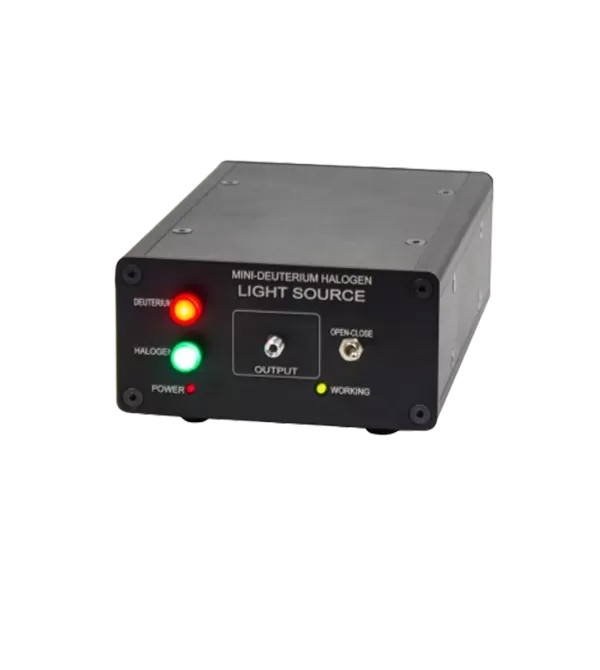
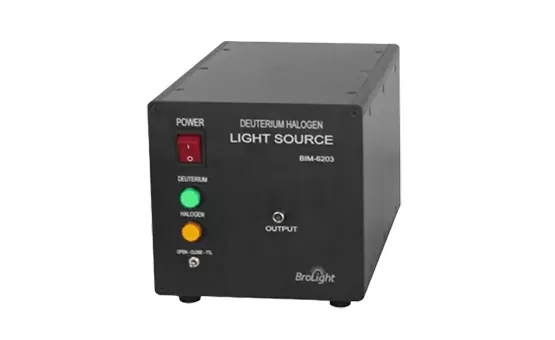
Brolight provides deuterium light source solutions for UV-Vis spectroscopy, absorbance measurement, transmittance measurement and photonics laboratory applications. For users who need both UV and visible-near infrared coverage, BroLight deuterium tungsten light sources combine a D₂ lamp and a tungsten lamp to provide stable broadband spectral output.
| Product Solution | Suitable Use | Why Choose It |
| BIM-6203 Deuterium Tungsten Light Source | UV-Vis spectroscopy and laboratory measurement | Combines deuterium and tungsten output for broader spectral coverage |
| BIM-6213 Mini Deuterium Tungsten Light Source | Compact spectroscopy systems and teaching labs | Smaller size for flexible integration |
| Deuterium Light Source | Absorbance, concentration and transmittance testing | Stable UV output for analytical measurement |
Conclusion
A deuterium lamp is an essential UV light source for UV-Vis spectroscopy, HPLC detection, absorbance measurement and analytical instruments. It generates stable continuous ultraviolet light through electrical discharge in deuterium gas, making it more suitable for short-wavelength UV measurement than many conventional light sources.
If your application requires stable UV output, broader UV-Vis-NIR coverage or integration with a spectrometer system, BroLight can provide deuterium light source and deuterium tungsten light source solutions for laboratory, research and industrial measurement needs. Contact Brolight to request product specifications or get a suitable light source recommendation.
FAQ
What is a deuterium lamp?
A deuterium lamp is a gas-discharge UV light source that uses low-pressure deuterium gas to generate continuous ultraviolet light. It is commonly used in UV-Vis spectroscopy, HPLC detectors and analytical instruments.
What wavelength range does a deuterium lamp cover?
A deuterium lamp is mainly used for UV wavelengths below 400 nm. The short-wavelength limit depends on the window material, such as UV glass, synthetic silica or MgF₂.
Why is a deuterium lamp used in UV-Vis spectroscopy?
A deuterium lamp is used in UV-Vis spectroscopy because it provides stable and continuous UV output, which is important for absorbance measurement and wavelength scanning in the ultraviolet region.
What is the difference between a deuterium lamp and a tungsten lamp?
A deuterium lamp provides strong UV output, while a tungsten lamp is mainly used for visible and near-infrared wavelengths. Many UV-Vis systems use both lamps to cover a broader spectral range.
What is the lifetime of a deuterium lamp?
Many deuterium lamps have a typical lifetime around 1000–2000 hours, depending on lamp design, operating conditions and power supply stability. Users should track operating hours and replace the lamp before output stability becomes unacceptable.
Does a deuterium lamp need warm-up time?
Yes. A deuterium lamp usually needs warm-up time before stable measurement. Warm-up allows the cathode, gas pressure and output intensity to stabilize.
What is a deuterium tungsten light source?
A deuterium tungsten light source combines a deuterium lamp for UV output and a tungsten lamp for visible-near infrared output. It is useful for UV-Vis spectroscopy and broadband spectral measurement.
How do I choose a deuterium lamp for spectroscopy?
Choose a deuterium lamp according to wavelength range, output stability, window material, lamp lifetime, optical interface, power supply and whether your application requires only UV output or broader UV-Vis-NIR coverage.
 EN
EN
 jp
jp  ko
ko  fr
fr  de
de  es
es  tr
tr  ru
ru  pt
pt  ar
ar  vi
vi