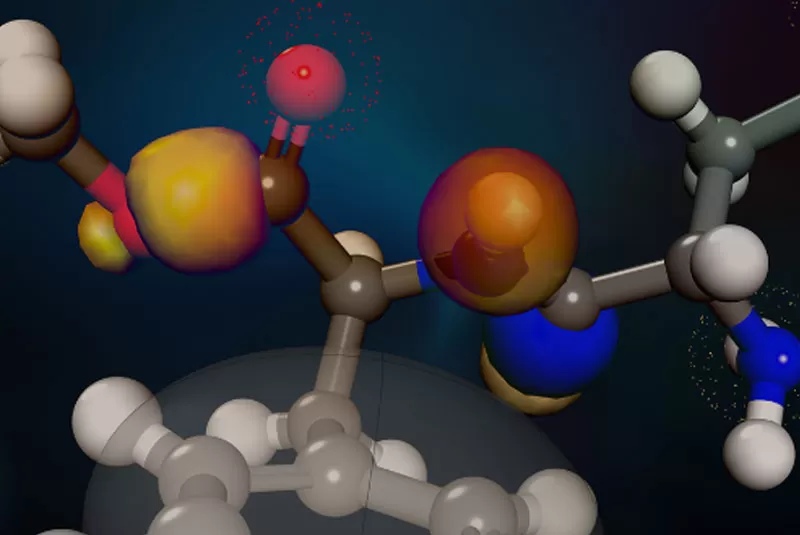
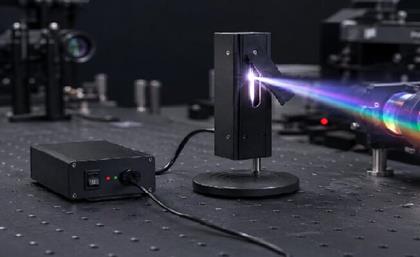
The principle of spectroscopic water quality analysis is to measure the spectral data of water samples within the ultraviolet to visible light wavelength range, and analyze the absorption spectral characteristics based on precise algorithm models. It can simultaneously measure various water quality parameters such as TOC, COD, NO3-N, NO2-N, color, and turbidity, etc.
The principle of spectroscopic water quality analysis is to measure the spectral data of the water sample within the ultraviolet to visible light wavelength range. Based on precise algorithm models, the absorption spectral characteristics are analyzed, and various water quality parameters such as TOC, COD, NO3-N, NO2-N, color, and turbidity can be measured simultaneously. The essence of its implementation principle lies in the fact that different component factors have different absorption characteristics in different wavelength bands. For example, nitrate nitrogen and nitrite nitrogen absorption mainly occurs below 250 nm, while chemical oxygen demand and organic matter mainly occur in the ultraviolet wavelength range below 400 nm. Color and turbidity are measured in the visible light region. As shown in the following figure.
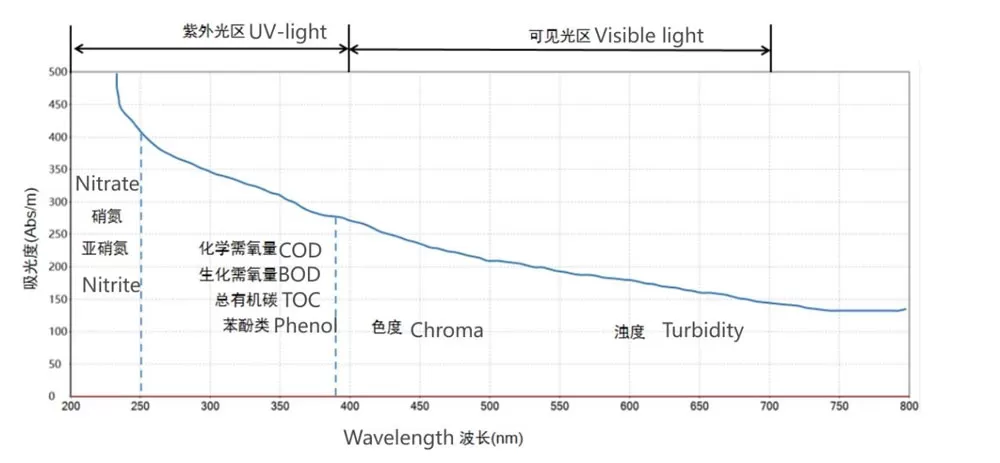
Figure 1 Spectral absorption characteristics of different pollutant components
The composition of the commonly used spectral water quality measurement and analysis system is shown in the following figure. The broadband light beam is first converted into parallel light by the collimating lens, passes through the water sample in the sample cell, and is then focused by the focusing lens and merged into the spectrometer. The ultraviolet-visible light is dispersed into single-wavelength beams, which are irradiated on the detector to complete the conversion of optical signals. Combined with algorithm calibration and other operations, the measurement of water quality components is achieved. This system is suitable for multi-factor measurement. For single-factor measurement, the spectrometer can be replaced by a photodetector, and the measurement of the light intensity signal at a fixed wavelength can be achieved.
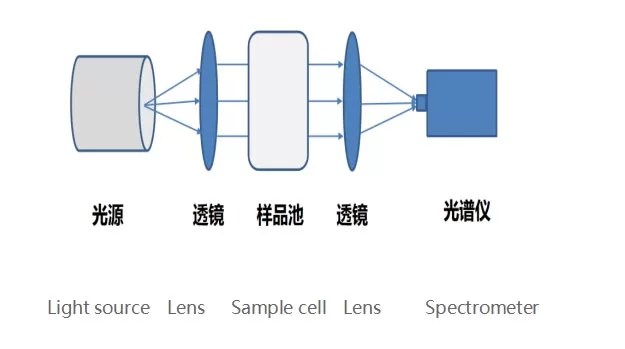
Figure 2 Schematic diagram of the spectrometric water quality measurement system
The measurement of spectral signals is actually the measurement of absorbance. The light signal passing through the water sample is related to the concentration of substances in it according to the Lambert-Beer law equation:
Absorbance A = log (Io/I) = K * C * OPL
Combining molecular spectroscopy technology and chemometric algorithms, from the spectral signals obtained during sampling, the concentration information of pollution indicators can be accurately and comprehensively derived. Brolight upper-level computer software can support basic single-factor concentration modeling. For multiple-factor analysis, customers need to conduct secondary development based on the spectral data.
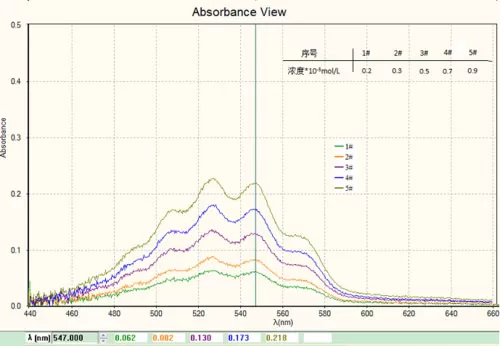
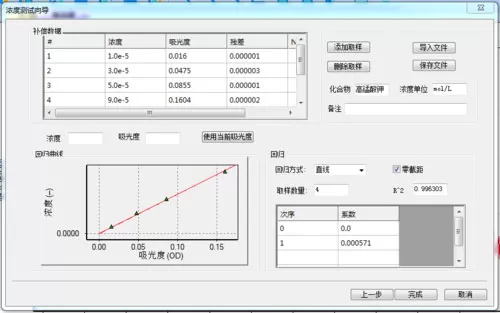
Figure 3 Absorbance curves of different concentrations of KMnO4 and concentration calculation
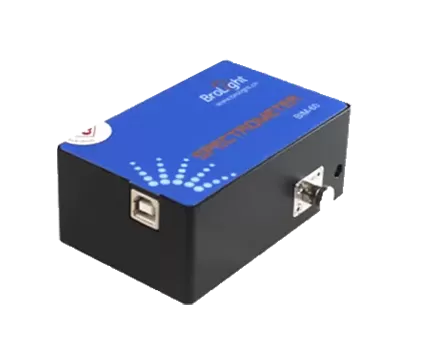
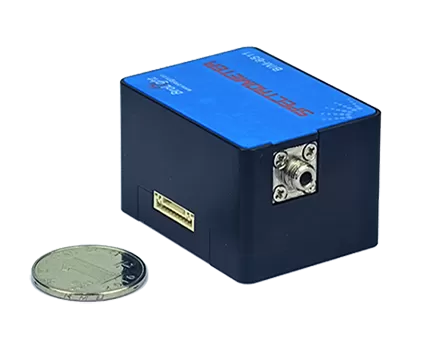
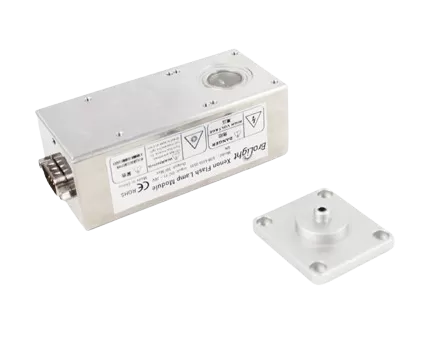
The light sources in the system can be either the BIM-6213 deuterium-tungsten lamp source or the SIM-6205 flashing xenon lamp source. The former provides a stable ultraviolet-visible spectrum and can be used in laboratory water quality detection instruments, while the latter offers ultraviolet-visible pulsed spectra and is more suitable for integration into small portable instruments. The spectrometer can choose the conventional BIM-6002A Miniature Spectrometer. If it needs to be integrated into a probe-type instrument, the BIM-6511 MINI-spectrometer can be selected.
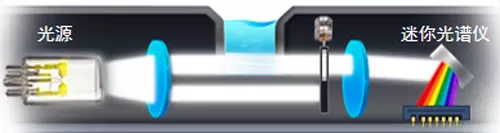
Figure 4 Schematic Diagram of Probe-Type Water Quality Measurement System
Spectrophotometric water quality analysis has the advantages of fast response, no need for reagents, no secondary pollution, low maintenance cost, and the ability to measure multiple factors. It is highly suitable for online detection scenarios, such as rapid online monitoring of rainwater and sewage pipelines, and river and lake outlets.
 EN
EN
 jp
jp  ko
ko  fr
fr  de
de  es
es  tr
tr  ru
ru  pt
pt  ar
ar  vi
vi