Reflectance and transmittance are the basic optical properties of objects and the basic content of the spectral measurement as well. For the different types of samples, in order to obtain the best spectral measurement data, reflectance and transmittance will contains more information.
When measuring the reflectance, it is necessary to consider whether it is specular reflectance or diffuse reflectance or a sample whose reflectance changes with the angle of the incident light. We observe that most of the color is based on diffuse reflectance, and those that are very dazzling or very bright ones are mostly involve both specular reflectance and diffuse reflectance. When we measure the reflectance, it is important to determine which type of reflectance it is, and whether we want to receive all or part of the reflected light. In food applications, most of the reflectance measurements are based on diffuse reflectance.
Typical reflectance Measurement System
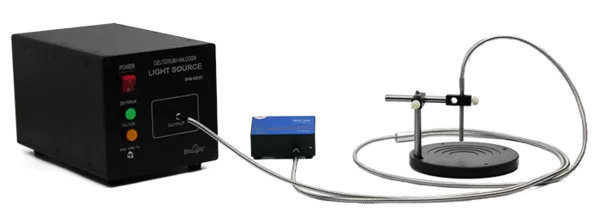
• Spectrometer: a UV-Vis or Vis-NIR spectrometer is optional based on user requirements.
• Light source: 400nm-2000nm or 200nm-2000nm tungsten light source is optional.
• Reflectance Standard: If it is diffuse, you can use diffuse reflectance standard whiteboard, if it is specular reflectance, you can use high mirror reflectance standard board.
• Probe: The Y-type reflective probe is an ideal choice when we need to quickly measure the sample or apply a very small sampling point on the surface of the sample. It can measure both specular reflectance and diffuse reflectance, and can choose different types of fiber (UV-Vis or Vis-NIR) based on the configuration of the light source and the spectrometer. The emitted light and the reflected light of the probe are in the same direction, and the received light is part of the reflected light. Therefore, using a reflective probe to measure the reflectance spectrum is relative measurement.
• Stage: Light from the fiber to the surface of the sample requires a certain amount of space to form the reflected light, so the probe needs a certain distance from the sample. So the probe will not scratch the surface of the sample. Using a reflective stage, the distance between the probe and the sample surface can be well fixed, and get good reflectance measurement data.
Features
Easy Sample Handling - Minimal fixture requirements for versatile sample placement
User-Friendly Operation - Simple protocols with excellent repeatability and rapid detection
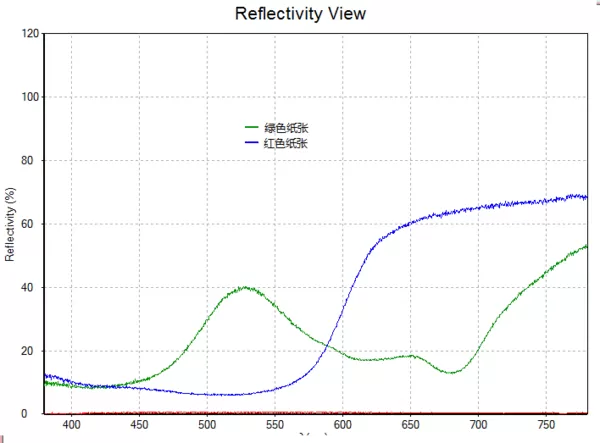
Comprehensive Spectral Data - Full-spectrum reflectance values and curves for complete analysis
Advanced Color Measurement - Integrated sphere sampling for precise material color characterization
Related products:
BIM-6001A SERIES Miniature Spectrometer
BIM-6203 Deuterium Tungsten Light Source
 EN
EN
 jp
jp  ko
ko  fr
fr  de
de  es
es  tr
tr  ru
ru  pt
pt  ar
ar  vi
vi