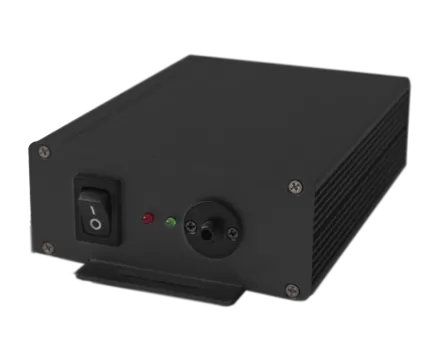
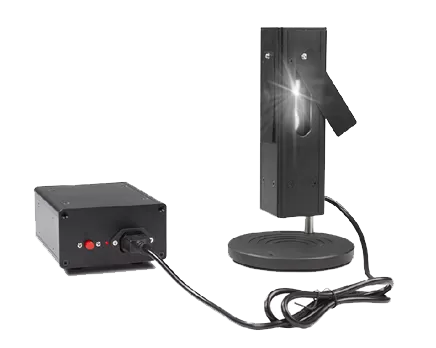
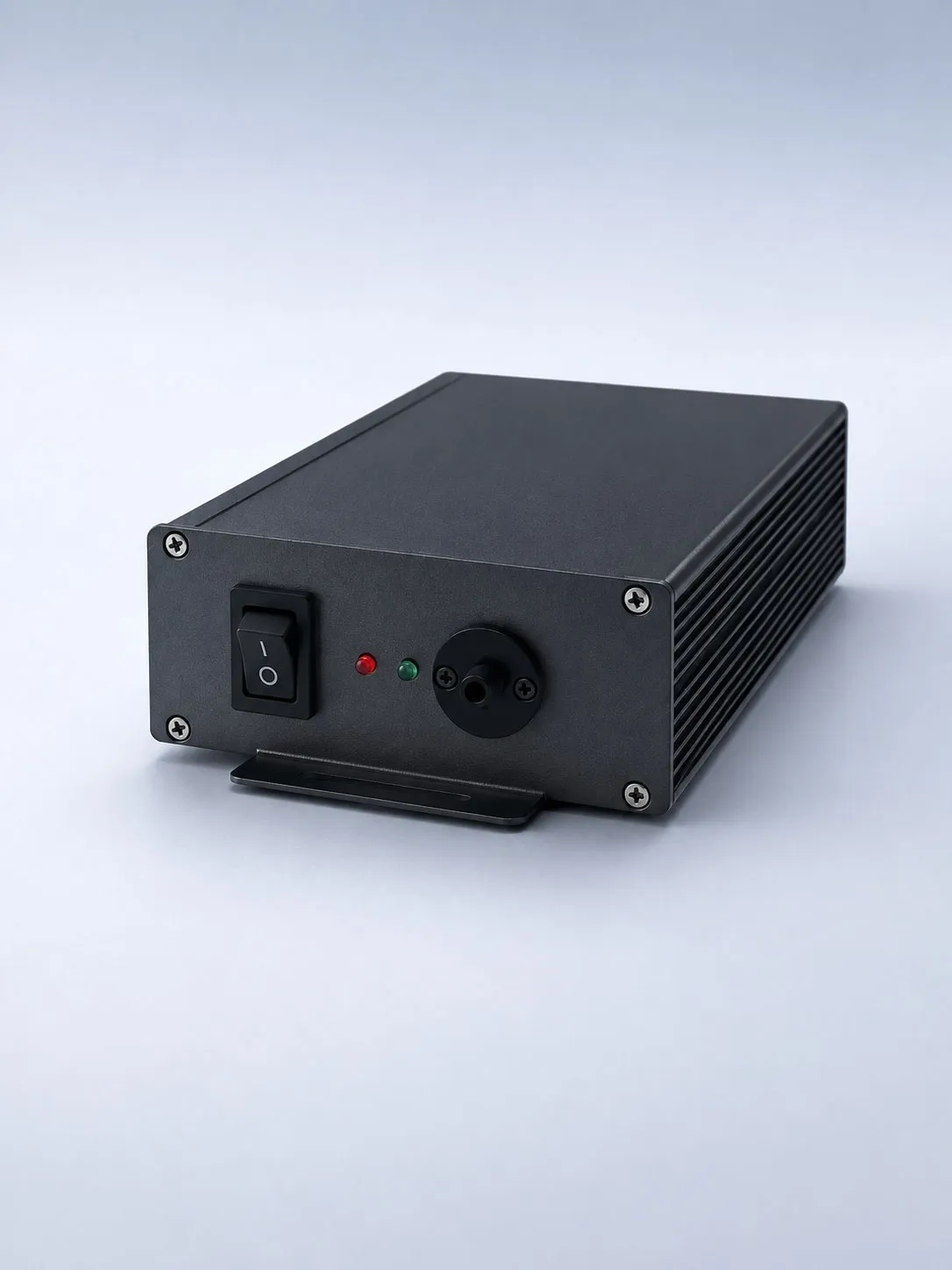
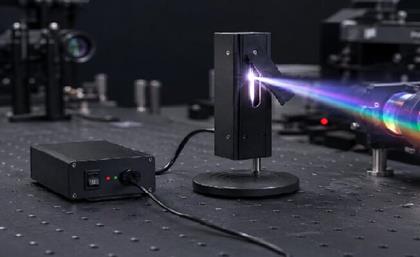
Brolight offers mercury light source solutions for different optical measurement requirements, including compact wavelength calibration sources and low pressure mercury lamp systems. Depending on the application, users can select a light source based on wavelength range, characteristic spectral lines, optical interface, lamp power, and instrument compatibility.
Selecting the right mercury light source depends primarily on the wavelength range and calibration task.
| Model | Light Source Type | Wavelength / Spectral Lines | Power | Recommended Application |
| BIM-6212 | Mercury lamp | 253–912 nm calibration range | 3 W | UV-Vis-NIR wavelength calibration |
| BIM-6250 | Low-pressure mercury lamp | 404.7, 435.8, 546.1, 577.0, 579.0 nm | 20 W | Calibration and optical resolution testing |
For broad-range spectrometer calibration, BIM-6212 is generally the more suitable option. For applications requiring several clearly separated visible mercury emission lines, BIM-6250 provides convenient reference peaks for calibration and resolution verification.
A mercury lamp UV spectrum is characterized by distinct atomic emission lines rather than the smooth continuous output commonly associated with broadband light sources.
When electrical energy excites mercury atoms inside the lamp, electrons transition between atomic energy levels and emit radiation at specific wavelengths. These characteristic lines can occur in ultraviolet and visible regions, making mercury lamps valuable references for spectrometers and other wavelength-sensitive optical instruments.
For calibration applications, the advantage is not simply high light intensity. More importantly, the instrument can identify known mercury spectral peaks and compare their measured positions with the expected wavelengths.
This allows users to evaluate wavelength accuracy, instrument drift, and, in suitable configurations, spectral resolution.
For optical systems requiring broadband continuous illumination instead of discrete reference lines, a xenon light source may be more appropriate.
Mercury emission lines provide known wavelength references that can be used to verify the wavelength accuracy of spectrometers, monochromators, and other optical measurement systems. A calibration measurement compares the detected spectral peak position with the known reference wavelength. Any measurable deviation can then be evaluated as part of instrument calibration or maintenance.
Mercury lamps are commonly paired with optical spectrometers when wavelength accuracy needs to be checked. For example, a CCD spectrometer can detect characteristic mercury peaks and use them as references for checking whether the instrument's wavelength axis remains correctly calibrated.
Closely spaced mercury spectral lines can also help evaluate whether an optical instrument can distinguish between adjacent wavelength peaks. The 577.0 nm and 579.0 nm lines available from BIM-6250 can be useful for this type of optical resolution assessment when the measurement system and configuration are suitable.
Because the spectral lines of mercury are clearly defined, mercury light sources are also useful for demonstrations involving atomic emission spectra, wavelength measurement, spectroscopy, and optical instrument principles.
1. Required Wavelength Range
Start by identifying which spectral region your instrument needs to measure or calibrate.
A broad calibration requirement may favor a source such as BIM-6212, while a measurement requiring several distinct visible mercury lines may be better suited to BIM-6250.
2. Spectral Line Requirements
Not every calibration task requires the same mercury wavelengths.
Check whether the available characteristic peaks correspond to the operating wavelength range of your spectrometer, detector, monochromator, or other optical instrument.
3. Lamp Pressure and Spectrum
Low-pressure mercury lamps generally provide more distinct characteristic lines, while higher-pressure lamps may provide stronger and more complex spectral output.
The appropriate option therefore depends on whether your priority is wavelength referencing, illumination intensity, or another optical requirement.
4. Optical Interface and System Compatibility
Consider how the light source will be coupled into the measurement system.
Fiber coupling, free-space optical output, detector sensitivity, numerical aperture, and instrument geometry can all affect the amount of usable light reaching the detector.
5. Mercury Lamp Power Supply
The mercury lamp power supply must match the electrical requirements of the selected light source.
For example, BIM-6212 uses a 12 VDC / 1 A adapter, while BIM-6250 operates from a 220 VAC power supply. Always confirm the electrical configuration before integrating the source into an optical measurement setup.
6. Calibration Purpose
For routine wavelength accuracy checks, broad-range calibration, or optical resolution verification, the best mercury light source may differ.
If you are unsure which configuration fits your instrument, provide Brolight with the wavelength range, spectrometer model, optical interface, and intended measurement task for product selection support.
A mercury light source is a gas-discharge light source in which electrically excited mercury atoms emit characteristic spectral lines at defined wavelengths. These discrete emission lines make mercury lamps especially useful for spectroscopy, wavelength calibration, and optical testing.