Mercury light sources continue to play a critical role in photonics and spectroscopy laboratories worldwide. Their sharp, stable spectral lines make them indispensable for accurate calibration and ultraviolet applications. As laboratories demand higher precision and reliability, a high-quality mercury light source has become an essential instrument for both research and industrial use.
This article explores the key benefits, applications, and selection criteria for mercury light sources in 2026.
Understanding Mercury Light Sources and Their Unique Spectral Characteristics
A mercury light source is a gas-discharge lamp that emits intense light at specific, well-defined wavelengths. Low-pressure mercury lamps are particularly valued because they produce narrow and highly stable emission lines, especially in the ultraviolet region.
These discrete spectral lines provide excellent wavelength references, allowing researchers and technicians to achieve precise calibration that broadband light sources cannot match. The stability and repeatability of these lines are fundamental to accurate spectroscopic measurements.
Key Applications of Mercury Light Sources in Laboratories and Industry
Mercury light sources are widely used across multiple fields, including:
Wavelength calibration of spectrometers and monochromators
Fluorescence excitation in biochemistry and material science
Ultraviolet curing and photochemical reactions
Quality control and testing in optical component manufacturing
Educational experiments in physics and optics laboratories
Their ability to deliver high-intensity output at known wavelengths without additional filters makes them highly efficient and practical for daily laboratory work.
Technical Advantages of Low-Pressure Mercury Lamps
Low-pressure mercury light sources offer several significant advantages:
Extremely narrow spectral linewidth for superior calibration accuracy
High radiant intensity at characteristic UV and visible lines
Excellent long-term wavelength stability
Fast warm-up time and consistent performance
Cost-effective operation for frequent use
These features make mercury lamps a preferred choice when precision and reliability outweigh the need for broad continuous spectrum coverage.
How to Select the Right Mercury Light Source for Calibration and UV Experiments
When choosing a mercury light source, key factors to consider include lamp type (low-pressure vs high-pressure), output intensity, warm-up time, stability, safety features, and ease of integration with existing optical systems.
For most spectroscopy and calibration tasks, low-pressure mercury lamps are recommended due to their sharp emission lines and long operational life. Durability, compact design, and reliable after-sales support are also important considerations for long-term laboratory use.
Brolight Mercury Light Source: High-Intensity Performance You Can Rely On
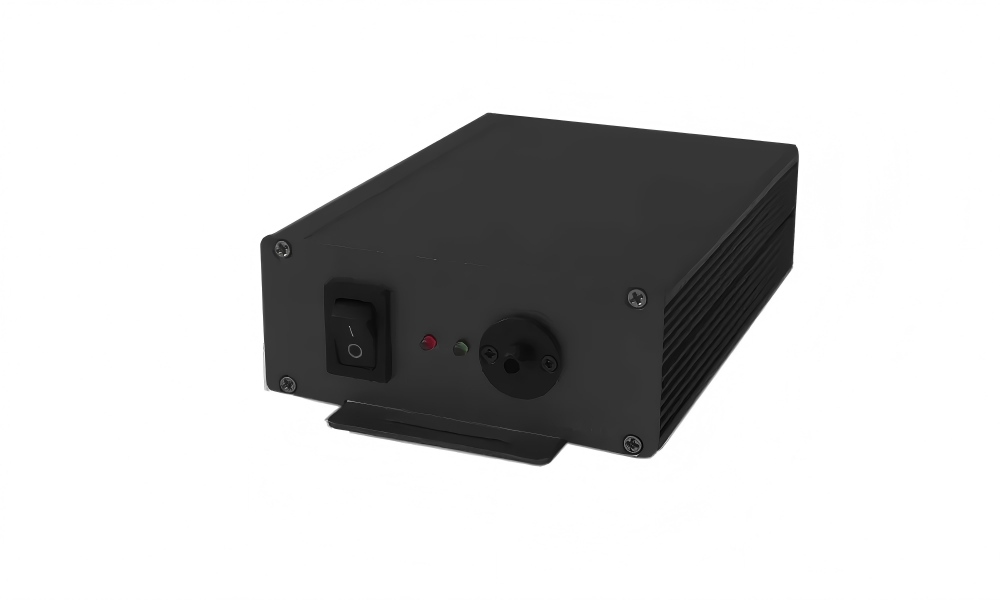
Brolight specializes in precision photonics instruments and offers a reliable mercury light source designed for demanding spectroscopy applications. Engineered for stability and ease of use, Brolight’s mercury light sources deliver consistent high-intensity output, making them a trusted choice for universities, research institutes, and industrial laboratories.
For a complete overview of how mercury light sources fit into the broader ecosystem of photonics instruments, including spectrometers and optical power meters, read our in-depth guide:The Ultimate Guide to Photonics Analytical Instruments in 2026: Spectrometers, Mercury Light Sources, and Optical Power Meters
In conclusion, a high-quality mercury light source remains one of the most effective tools for accurate spectroscopic work. With strong performance and proven reliability, Brolight continues to deliver practical solutions that meet the needs of modern photonics laboratories.
FAQs About Mercury Light Sources
How long does it take for a mercury light source to stabilize after turning on?
Most low-pressure mercury lamps need 5 to 15 minutes of warm-up time to reach stable output and optimal wavelength accuracy.
Are mercury light sources safe to use in teaching laboratories?
Yes, when used with proper protective eyewear and following standard safety protocols, they are suitable for educational environments.
Can mercury lamps be used for both UV and visible light applications?
Yes. They produce strong lines in both ultraviolet and visible regions, making them versatile for different experimental needs.
What is the typical operating lifetime of a mercury light source?
With normal use, a quality low-pressure mercury lamp can operate between 2000 and 5000 hours before significant intensity drop.
Do mercury light sources require regular maintenance?
Maintenance is minimal, but periodic cleaning of the lamp housing and checking electrical connections helps ensure long-term stable performance.
 EN
EN
 jp
jp  ko
ko  fr
fr  de
de  es
es  tr
tr  ru
ru  pt
pt  ar
ar  vi
vi