Photonics analytical instruments play a vital role in modern scientific research, education, and industrial applications. From precise spectral analysis to accurate optical power measurement, these tools enable breakthroughs across multiple fields. Brolight, a professional manufacturer based in Hangzhou, specializes in developing high-quality photonics analytical instruments, including advanced spectrometers, mercury light sources, and optical energy meters.
This comprehensive guide explores the principles, applications, and selection criteria of these essential instruments to help researchers, educators, and engineers make informed decisions in 2026.
What Are Photonics Analytical Instruments and Why They Matter
Photonics analytical instruments are devices used to generate, manipulate, and measure light and its interaction with matter. They include spectrometers for spectral analysis, light sources for illumination and calibration, and optical energy meters for quantifying light intensity and energy.
In 2026, these instruments have become increasingly important due to rapid advancements in materials science, semiconductor technology, renewable energy, and environmental monitoring. Their ability to deliver fast, accurate, and non-destructive measurements makes them indispensable in both laboratory and production environments. The demand for higher precision, better integration, and user-friendly operation continues to drive innovation in this field.
Key Applications in Research, Education, and Industry
In research laboratories, photonics instruments support cutting-edge studies in quantum optics, nanotechnology, and biochemistry. In educational settings, they enable hands-on learning in physics and optics courses. In industry, they are widely used for quality control, process monitoring, and product development in sectors such as semiconductors, photovoltaics, laser manufacturing, and optical communications.
Mercury Light Source: Principles, Advantages, and Best Use Cases
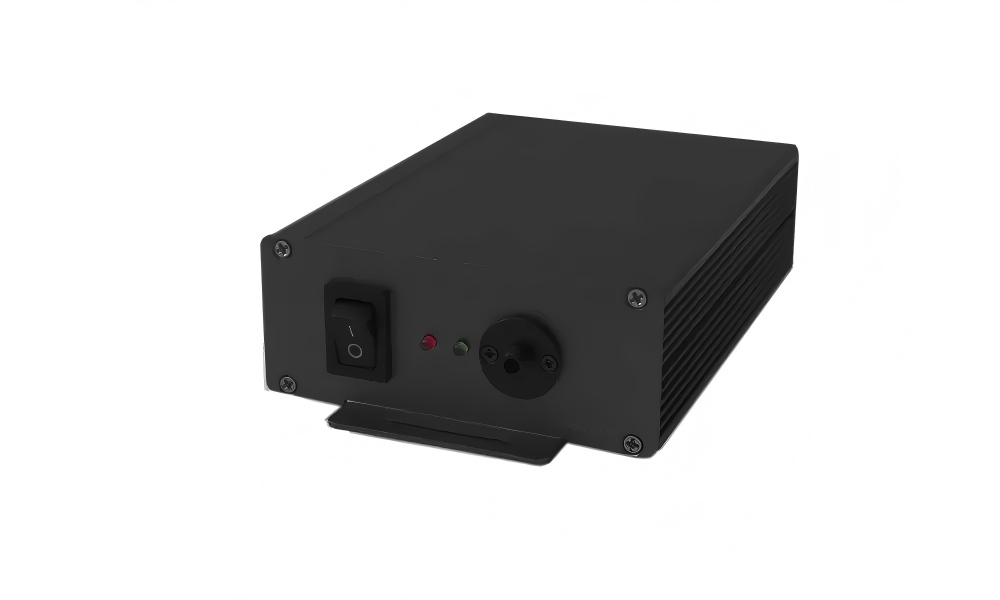
A mercury light source is a gas-discharge lamp that produces intense, discrete spectral lines, making it highly valuable for optical calibration and ultraviolet applications. Low-pressure mercury lamps are particularly popular because they generate strong emission peaks at specific wavelengths, most notably 254 nm and 365 nm.
Why Low-Pressure Mercury Lamps Excel in Calibration and UV Applications
Low-pressure mercury light sources offer excellent wavelength stability and high intensity at characteristic lines, which makes them ideal for calibrating spectrometers and other wavelength-sensitive instruments. Their sharp spectral lines serve as reliable reference points without the need for additional filters. In UV applications, they are commonly used for fluorescence excitation, UV curing, and photochemical experiments due to their strong output in the ultraviolet region.
Optical Energy Meters: Accurate Measurement of Optical Energy and Power
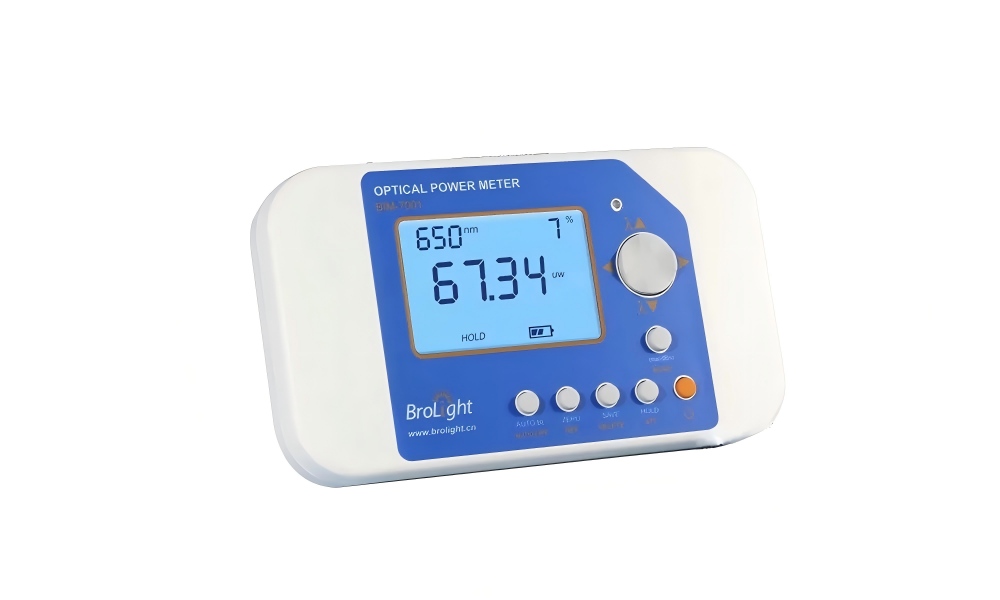
An optical energy meter is an essential instrument for measuring the power or energy of optical signals. It is widely used to quantify light intensity from lasers, LEDs, and other light sources in watts (W) or decibels (dBm).
USB Photodiode Power Meters vs Traditional Models
Modern USB photodiode power meters, such as Brolight’s BIM-710xU series, offer significant advantages over traditional benchtop models. They provide high sensitivity, fast response times, and convenient computer connectivity for real-time data logging and analysis. With user-friendly software, these compact devices allow seamless integration into automated test systems and educational setups.
How to Choose the Right Photonics Analytical Instruments for Your Lab or Production Line
Selecting the appropriate photonics instruments requires careful consideration of several technical parameters.
Critical Specifications Checklist
When evaluating spectrometers, mercury light sources, or optical energy meters, pay attention to the following:
Resolution and Sensitivity: Higher spectral resolution for detailed analysis and better sensitivity for weak signals.
Wavelength Range: Ensure the instrument covers the required UV, visible, or near-infrared range.
Connectivity: USB, Bluetooth, or network interfaces for easy data transfer and integration.
Stability and Repeatability: Critical for long-term experiments and industrial quality control.
Software Support: Intuitive software with data processing, export, and automation capabilities.
Matching these specifications to your specific application ensures optimal performance and value.
Here is a comparison table of typical photonics analytical instruments:
| Instrument | Primary Function | Key Advantage | Common Applications |
|---|
| Mercury Light Source | Wavelength calibration & UV output | Sharp discrete spectral lines | Spectrometer calibration, UV experiments |
| Optical Energy Meter | Optical power & energy measurement | High accuracy & fast response | Laser testing, fiber optics, QC |
| Spectrometer | Spectral analysis | Broad wavelength coverage | Material characterization, teaching |
Brolight Photonics Solutions: Precision Instruments from Hangzhou
Brolight is a trusted manufacturer of photonics analytical instruments, offering a comprehensive range of spectrometers, mercury light sources, and optical energy meters. Their products are known for reliable performance, practical design, and strong value for both educational institutions and industrial users.
Brolight’s mercury light source delivers stable and intense output suitable for precise calibration tasks. Their BIM-710xU Series USB Optical Energy Meter features convenient connectivity and accurate measurements, making it popular in research and production environments. Combined with their diverse spectrometer lineup, Brolight provides integrated solutions for complete photonic analysis.
Real-World Applications and Case Studies
In universities, Brolight instruments support undergraduate and graduate physics experiments, helping students understand fundamental optical principles through hands-on practice. In materials science laboratories, researchers use spectrometers and mercury light sources for characterizing new compounds and thin films. The semiconductor and photovoltaic industries rely on optical energy meters and spectrometers for quality assurance and process optimization. Laser manufacturers use these tools to verify beam parameters and ensure product consistency.
These real-world uses demonstrate the versatility and importance of high-quality photonics analytical instruments across different sectors.
In conclusion, photonics analytical instruments continue to advance rapidly, offering greater precision and usability for researchers, educators, and industry professionals. Brolight remains committed to delivering reliable, high-performance solutions including advanced mercury light sources and optical energy meters from its base in Hangzhou.
FAQs About Photonics Analytical Instruments
How often should I calibrate my spectrometer using a mercury light source?
It is recommended to perform wavelength calibration every 3 to 6 months, or whenever the instrument has been moved or subjected to significant environmental changes.
Can optical energy meters measure both continuous wave and pulsed lasers?
Yes, many modern optical energy meters support both continuous wave (CW) and pulsed laser measurements, though specifications may vary by model.
What is the typical lifespan of a mercury light source?
A well-maintained low-pressure mercury lamp can last between 2000 to 5000 hours depending on usage frequency and operating conditions.
Are USB optical energy meters suitable for industrial production lines?
Yes. Their compact size, fast data transfer, and software integration make them highly suitable for automated testing and production environments.
Do I need separate instruments for UV and visible light measurements?
Not necessarily. Many spectrometers and optical energy meters offer broad wavelength coverage, allowing measurements across UV, visible, and near-infrared ranges with a single device.
 EN
EN
 jp
jp  ko
ko  fr
fr  de
de  es
es  tr
tr  ru
ru  pt
pt  ar
ar  vi
vi