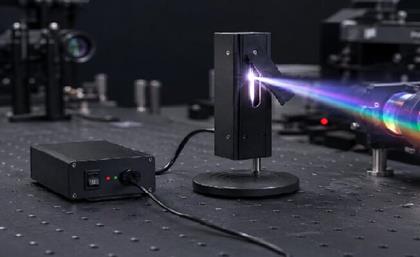
Whenever you need to understand a substance's composition, structure, state, or concentration without destroying it, you will likely need a special tool: a spectrometer.
In the simplest terms, a spectrometer is a scientific instrument that separates and measures the individual components of a physical phenomenon.
How Spectrometers Work
The reason spectrometers are so powerful is that different elements and molecules interact with energy in unique, predictable ways. For example:
When heated, each chemical element emits a specific set of colors (like a fingerprint).
Conversely, each element will also absorb specific colors when light passes through it.
A spectrometer captures this interaction, separates the signal into its components, and measures them. The resulting graph of this measurement is called a spectrum (plural: spectra).
The word "spectrometer" is a broad term for a whole family of instruments. While they all share the same core function—separating and measuring—they act on different properties.
Types of Spectrometers
There are several variations of spectrometers around, and some of the most common ones present are nuclear magnetic resonance (NMR) spectrometers, mass spectrometers, and optical spectrometers.
NMR Spectrometers: Nuclear Magnetic Resonance (NMR) spectrometers analyze the interaction between atomic nuclei' spins and a strong, constant magnetic field. When the sample is exposed to a radiofrequency pulse that matches the resonant frequency of the nuclei, a detectable NMR signal is generated.
The intramolecular magnetic field around atoms within a molecule causes shifts in this resonance frequency, providing detailed information about the molecular structure.
Mass Spectrometers: Unlike optical spectrometers, these do not rely on light. Instead, they separate atoms or molecules by mass. The sample is first ionized (converted into charged particles), after which electric or magnetic fields sort the ions according to their mass-to-charge ratio. This allows precise determination of the composition of a substance.
Optical Spectrometers: As the most prevalent type, these instruments separate light into its constituent wavelengths (colors). They are used to identify materials based on the light they emit, absorb, or scatter. This is the classic instrument most people visualize when they hear the term "spectrometer."
Applications and Brolight's Solutions
Spectrometers are now widely applied in fields such as chemistry, biology, environmental monitoring, astronomy, and industrial detection.
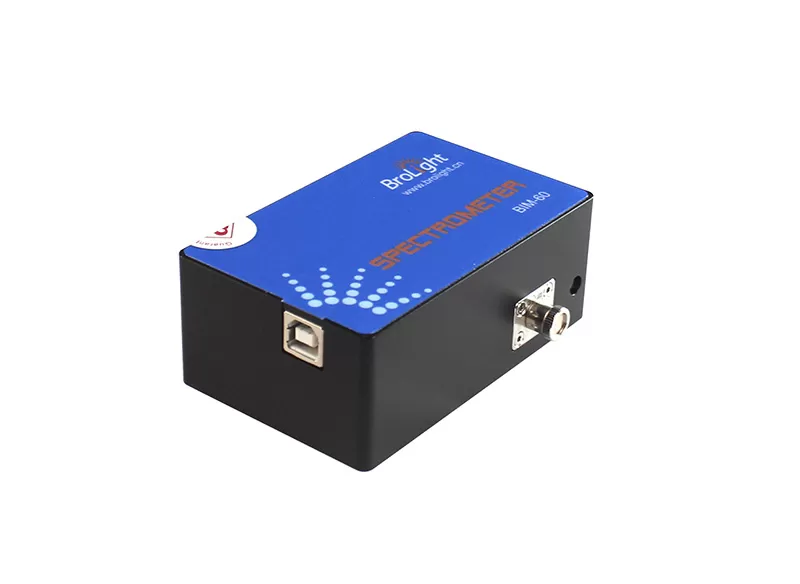
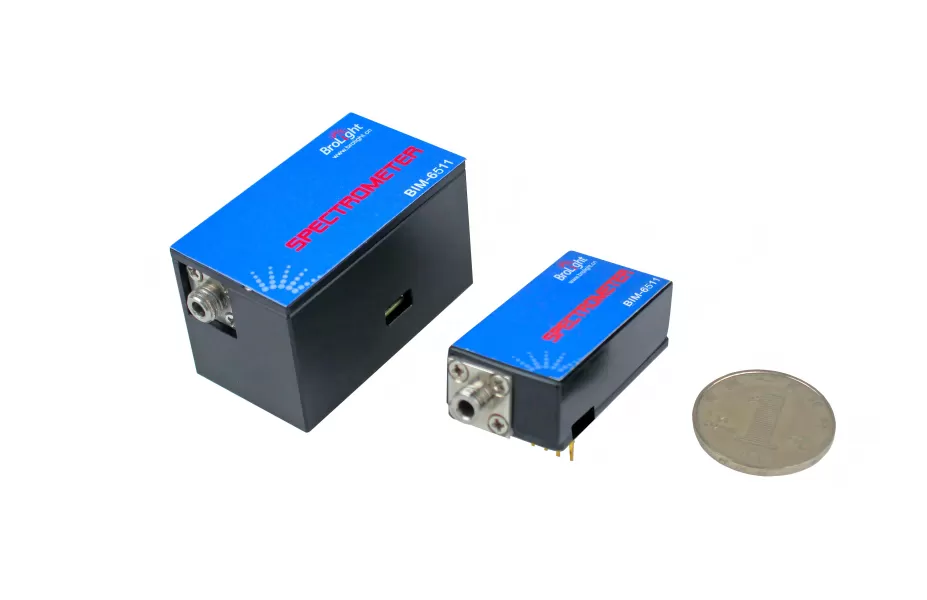
At Brolight, we specialize in designing and manufacturing high-quality spectrometers for applications across environmental monitoring, education, medical research, and industrial fields. Since our establishment, we have been committed to providing innovative and reliable spectral measurement tools that empower scientists, engineers, educators, and manufacturers alike.
What sets Brolight apart is our focus on cost-efficiency without compromising quality. Our devices enable rapid measurements, enhanced data quality—giving you a competitive edge in both speed and precision.
Our key offerings include:
Whether you're conducting academic research, performing environmental analysis, or implementing process control in manufacturing, Brolight provides the tools you need to see the light—and understand it.
Explore more, contact our team for a tailored solution.
 EN
EN
 jp
jp  ko
ko  fr
fr  de
de  es
es  tr
tr  ru
ru  pt
pt  ar
ar  vi
vi