— One Test Platform for All Packaging Levels, from Divergence Angle to Full Device Characterization
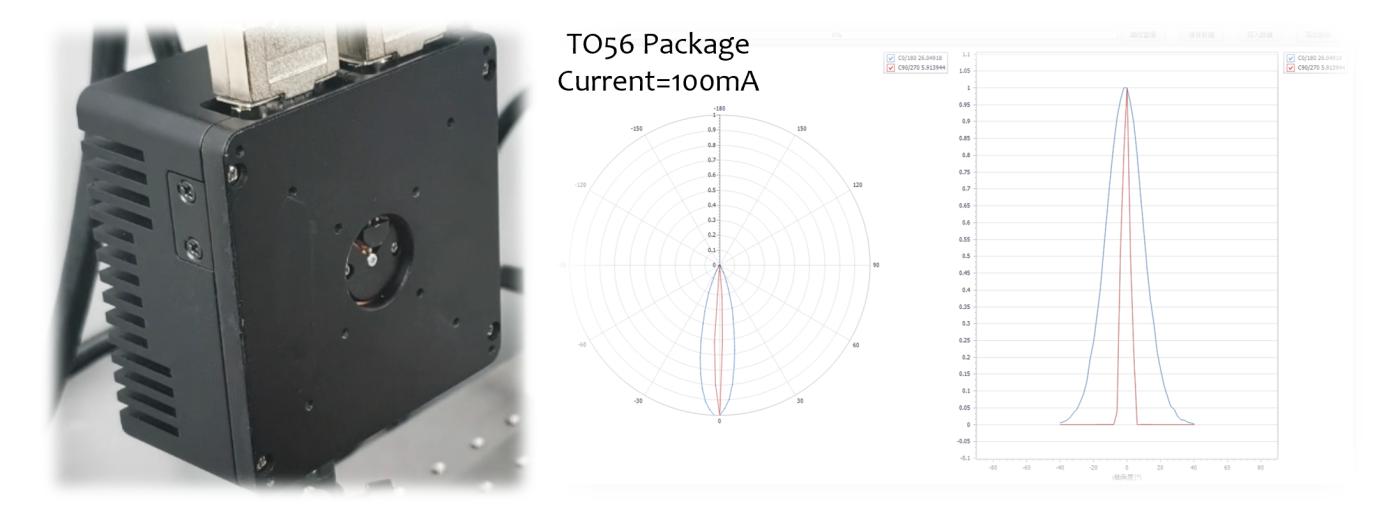
Overview
In optical communications, LiDAR, industrial processing, medical aesthetics, and many other fields, laser diodes (LDs), LEDs, and emerging emitters such as Micro-LEDs serve as light-emitting devices. Their performance directly determines the overall system behavior. Divergence angle – a key parameter that measures the "directivity" of a beam – is often the critical factor affecting system coupling efficiency, collimation design, and beam quality.
However, as shown in Figure 1, light-emitting devices span a broad spectrum of packaging levels – from fragile bare dies, to COS (Chip on Submount) mounted on heat sinks, to TO-packaged devices with lenses, and ultimately to complete modules. Each packaging level imposes different requirements on test systems. Traditional beam profilers can only measure emitters with small far-field divergence angles and are ineffective for large-divergence devices.
This is where BRM-6301 stands out – its defining strength lies in seamless adaptability across virtually all packaging levels, enabling you to standardize testing across different device types on a single platform.
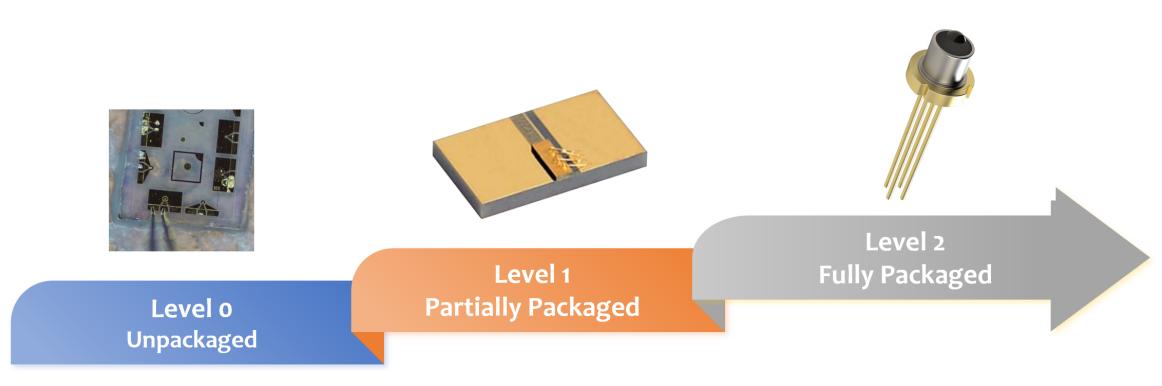
Figure 1: Packaging levels of light-emitting devices – from unpackaged (bare die) to partially packaged (COS) to fully packaged (TO/Butterfly) devices
Brolight's BRM-6301 Divergence Angle Analyzer is an automated test platform purpose-built to address these challenges. Together with the OPTIED Control & Data Platform and a complete product ecosystem including drivers, temperature controllers, spectrometers, optical power meters, and fixtures, we deliver integrated photonics test solutions from device to system level.
This guide starts with the real challenges faced by the industry, explains our solutions, and highlights the significance of divergence angle data for downstream applications.
Part 1: Key Challenges in Photonics Chip and Device Industries
Throughout the entire lifecycle of light-emitting device R&D, pilot production, mass production, and reliability verification, engineers frequently encounter the following challenges:
Challenge 1: Difficulty in Testing Across Different Packaging Levels
Important Note on Array Devices: The BRM-6301 divergence angle analyzer currently does not support batch testing of array-type light-emitting devices (such as VCSEL arrays, Micro-LED arrays, laser bars, etc.). For fine angular characteristic studies of individual chips, it can be configured with a high-precision probe station and microscopic imaging system for single-point testing.
Classified by emission mode and packaging level, BRM-6301 covers the following device categories:
Classification | Category | Package Format | Testing Considerations |
Emission Mode | Edge-Emitting Laser (EEL) | Bare die, COS, TO package, Butterfly package | Fast-axis divergence is large (30–40°), requiring full-angle coverage; slow-axis divergence is smaller (10–15°), requiring high angular resolution |
Surface-Emitting Laser (VCSEL) | Single emitter, TO package | Smaller divergence angle (~20–25°), good beam symmetry |
LED | Single chip, COB package | Lambertian emission, broad angular distribution, requiring half-intensity angle measurement |
Packaging Level | Unpackaged (Bare Die) | Bare die | Requires precision probe station for electrical contact and TEC temperature-controlled base for thermal stability |
Partially Packaged (COS) | Chip on Submount | BRM-6701 mounting socket with built-in TEC |
Fully Packaged (TO) | TO-Can (5.6mm/9mm) | BRM-6701 mounting socket, plug-and-play |
Fully Packaged (Butterfly) | Butterfly (14-pin) | BRM-6711 mounting socket with DB9 interface |
Custom Package | User-defined package | Custom fixture service available |
The BRM-6301 Advantage: Whether you are testing edge-emitting or surface-emitting devices, at any packaging level from bare die to Butterfly package, BRM-6301, together with the BRM-67xx series temperature-controlled mounting sockets, delivers a plug-and-play, quick-switch testing experience. One platform, all packaging levels – this is the defining value proposition of BRM-6301.
Challenge 2: Inability to Measure Large-Divergence Devices
Traditional beam profilers rely on CCD or CMOS imaging principles and are limited by sensor size and optical system design. They can typically only measure emitters with small far-field divergence angles. For large-divergence laser diodes (such as some edge-emitting lasers), traditional methods are simply incapable. Figure 2 illustrates the conventional camera-based measurement scheme.
As documented in the literature, a diode laser bar is characterized by two divergence angles: approximately 40° (FWHM) in the fast axis direction and 10° (FWHM) in the slow axis direction. These large, asymmetric divergence angles make efficient optical coupling particularly challenging.
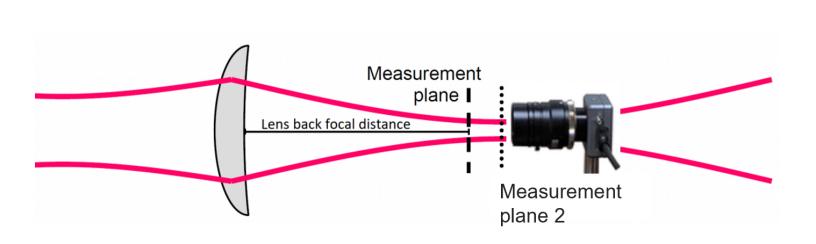
Figure 2: Principle of traditional beam profiler
Challenge 3: Incomplete Testing and Data Silos
In many laboratories, divergence angle is measured with one system, while P-I-V curves (power-current-voltage), threshold current, and wall-plug efficiency (WPE) are measured with another. Data cannot be correlated across systems, making it difficult for researchers to understand how temperature and drive current affect divergence angle from a holistic perspective.
Challenge 4: Lack of Temperature Control, Poor Test Repeatability
Light-emitting device performance is highly temperature-dependent – wavelength drift coefficient is 0.03–0.1 nm/°C, and divergence angle also varies with temperature. Without precise temperature control, test data lack comparability.
Challenge 5: Testing Challenges with Emerging Devices like Micro-LED
With the rapid advancement of display technologies, Micro-LED has gained significant attention as a next-generation display technology. However, the miniaturized nature of Micro-LED presents new testing challenges:
Challenge | Specific Manifestation | Testing Requirement |
Extremely small size | Chip size typically <100μm, some even <10μm | High-precision probe station + microscopic imaging system |
Complex angular characteristics | As chip size decreases, angular emission develops a double-peak profile; significant angular differences among RGB chips | Accurate angular distribution measurement of individual chips |
Color shift issues | Mismatched emission angles of RGB chips cause color shift at different viewing angles | Angle-resolved testing capability to evaluate color deviation |
Special Characteristics of Micro-LED Angular Emission Distribution: Studies show that as Micro-LED chip size decreases, the angular emission profile exhibits a distinct double-peak phenomenon, which is more pronounced in blue and green Micro-LEDs than in red Micro-LEDs of the same size. Additionally, red chips inherently have smaller emission angles than blue/green chips, and encapsulation materials further amplify the emission angles of blue/green light, leading to correlated color temperature (CCT) deviations. These characteristics make divergence angle testing an essential requirement for Micro-LED device evaluation.
Testing Method Note: For single Micro-LED chips, the BRM-6301 can be paired with a high-precision probe station and microscopic imaging system for detailed angular characteristic studies.
Part 2: Brolight Integrated Photonics Test Solution
2.1 BRM-6301 Automated Divergence Angle Analyzer
The BRM-6301 is an automated divergence angle analyzer specifically designed for large-divergence laser diodes. Its measurement scheme is shown in Figure 3, addressing the challenge that traditional beam profilers cannot measure large-divergence emitters.
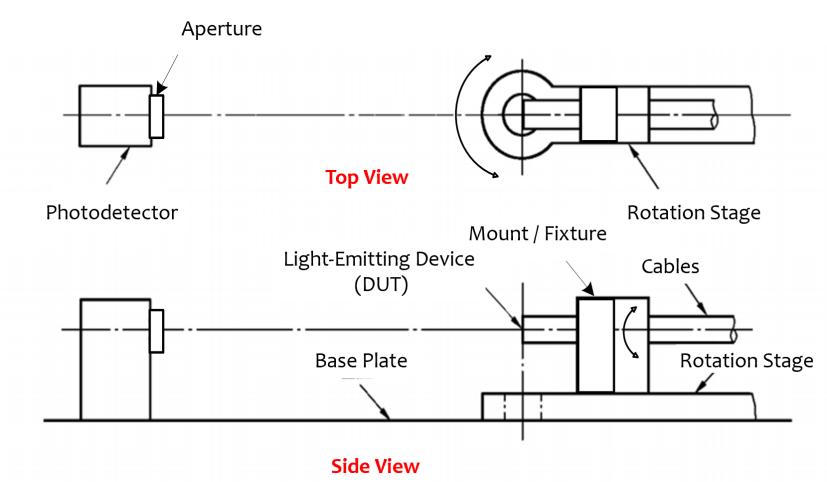
Figure 3: BRM-6301 divergence angle analyzer measurement scheme (Top View & Side View)
Specifications:
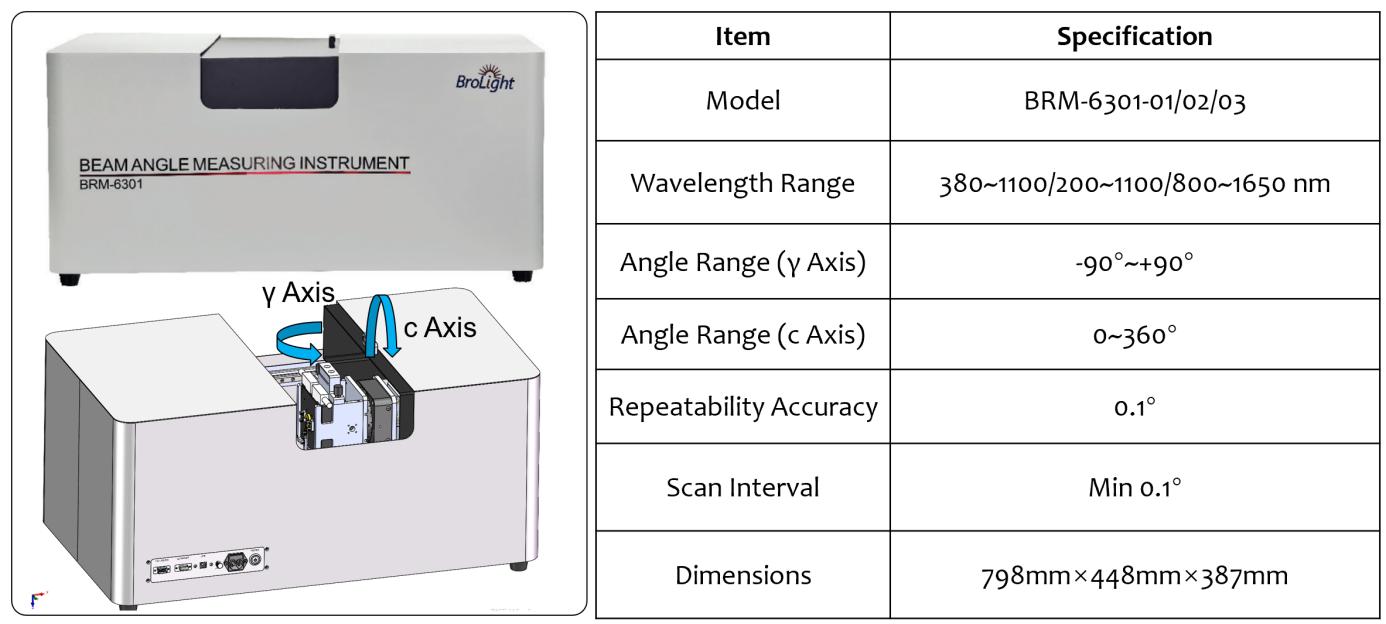
Key Capabilities:
Large-Divergence Measurement: Specifically designed for large-divergence emitters, with no limitation on divergence angle magnitude
Multi-Packaging-Level Adaptability – the defining differentiator: Flexible configuration with detector and mounting socket options tailored to the emitter's wavelength, power, and packaging level – from bare die to Butterfly package, all on one platform
Multiple Output Formats: Supports both polar and Cartesian coordinate angle distribution plots, with automatic half-intensity angle data output
One-Click Report Generation: Automatically compiles measurement data into test report format for easy archiving and customer delivery
LED Compatible: Also suitable for angular distribution measurement of LEDs
2.2 Complete Test Ecosystem: Driver, Temperature Controller, and Fixtures Integration
As shown in Figure 4, the BRM-6301 is not an isolated tester but a primary component of Brolight's complete photonics test ecosystem:
Product Series | Model/Series | Function | Significance for Divergence Angle Testing |
Divergence Angle Analyzer | BRM-6301 | Angular distribution measurement | Primary measurement unit |
Laser Driver Controller | BRM-610X Series | Programmable drive current for LD | Simultaneous analysis of P-I-V curves, threshold current, WPE |
TEC Temperature Controller | BRM-620X Series | Precise device temperature control (±0.1°C) | Ensures test repeatability; enables temperature-divergence relationship studies |
Temperature-Controlled Mounting Sockets | BRM-67xx Series | Adapts bare die, COS, TO, and other packaging levels | Plug-and-play, quick packaging-level switching – the foundation of multi-level adaptability |
Spectrometers | BIM-60 Series, BIM-66 Series | Optical emission spectrum measurement | Spectrum-temperature relationship studies; wavelength drift analysis |
Optical Power Meters | BIM-740x Series, BIM-710x Series | Output optical power measurement | Power-temperature relationship studies; thermal efficiency evaluation |
Control & Data Platform | OPTIED | Unified instrument control, data acquisition, and analysis | Breaks data silos; enables correlative analysis across all test parameters |
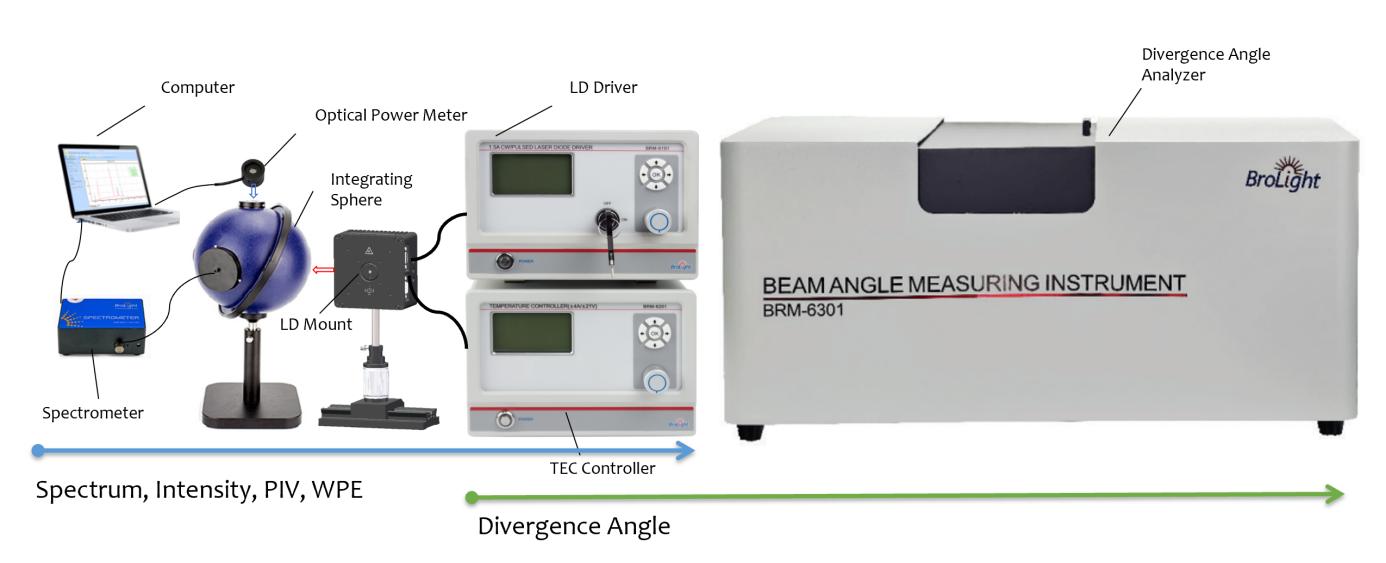
Figure 4: Complete LED/LD photonics characterization test ecosystem
2.3 Fixture Adaptation Solutions Across All Packaging Levels
The BRM-6301's ability to adapt to virtually any device packaging level is made possible by the BRM-67xx series temperature-controlled mounting sockets. The table below illustrates the comprehensive coverage:
Packaging Level | Recommended Mounting Socket | Temperature Control | Drive Method | Typical Users |
Unpackaged (Bare Die) | Custom probe station fixture | Requires TEC temperature-controlled base | Probe contact | Chip design houses |
Partially Packaged (COS) | BRM-6701 (TO-Can socket) | Built-in TEC, ±0.1°C | Pin contact | Assembly houses, device manufacturers |
Fully Packaged (TO) | BRM-6701 (TO-Can socket) | Built-in TEC, ±0.1°C | Standard pins | Module houses, system integrators |
Fully Packaged (Butterfly) | BRM-6711 (Butterfly socket) | Built-in TEC, ±0.1°C | DB9 interface | Optical transceiver module manufacturers |
Micro-LED Single-Chip Research | Custom high-precision probe station | Requires TEC temperature-controlled base | Probe contact | Display chip R&D institutions |
Key Differentiator: Unlike traditional systems that require complex reconfiguration or custom fixtures for each packaging level, BRM-6301 offers standardized, plug-and-play adaptability – drastically reducing setup time and eliminating measurement inconsistencies across different packaging levels.
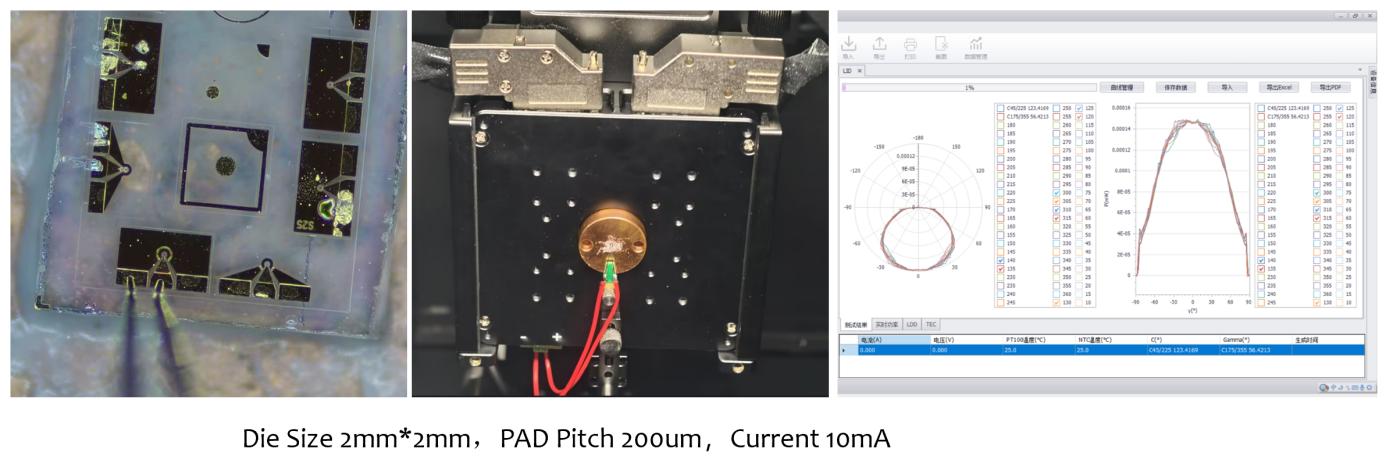
Figure 5: Unpackaged (bare die) testing example
2.4 OPTIED Control & Data Platform: The "Central Nervous System" for Instrument Integration
Brolight's OPTIED Control & Data Platform has fully integrated all devices – BRM-6301 divergence angle analyzer, BRM-610X driver controller, BRM-620X temperature controller, BIM-60/66 series spectrometers, and BIM-740x/710x series optical power meters – into a unified ecosystem for instrument control, data acquisition, and correlative analysis. Figure 6 shows a typical OPTIED interface.
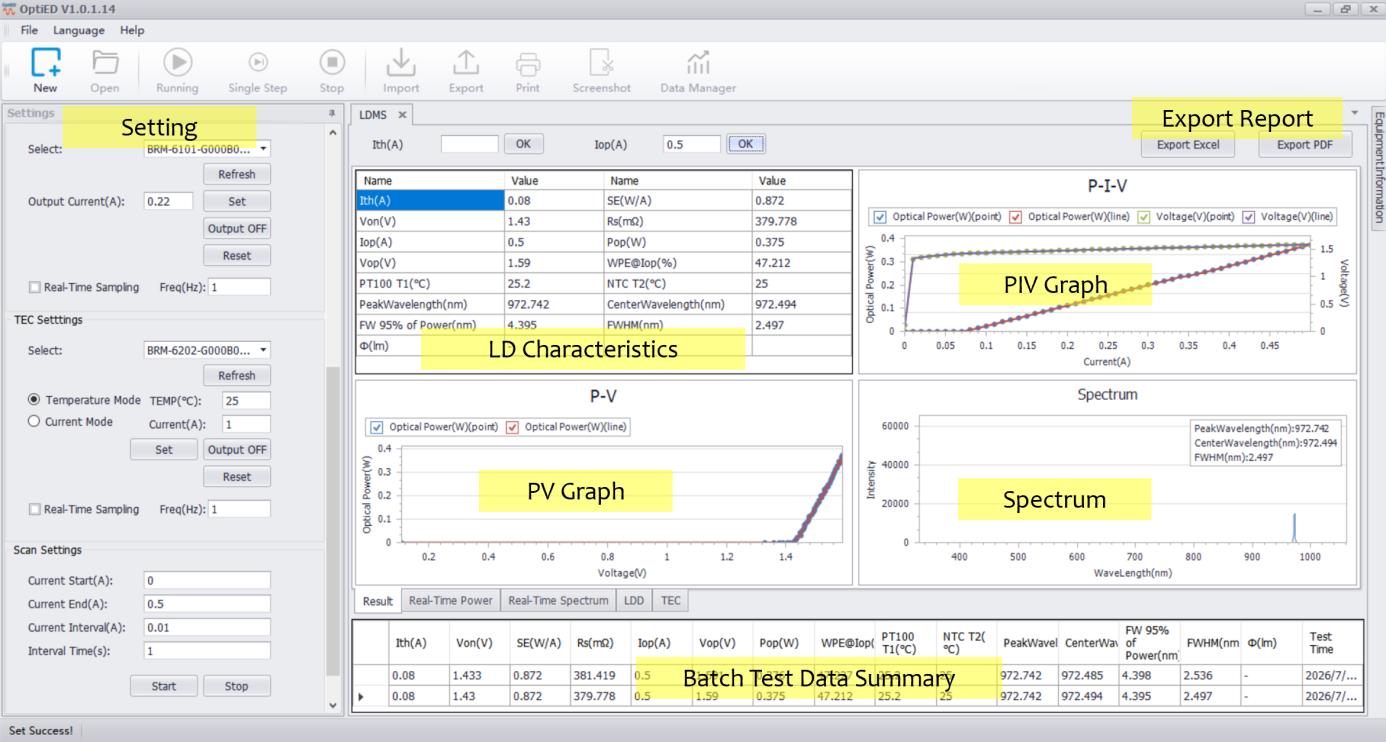
Figure 6: OPTIED Control & Data Platform interface
Researchers can easily obtain:
Divergence angle distribution (polar/Cartesian coordinates) at specific temperatures
Divergence angle trends as a function of drive current
P-I-V curve comparisons at different temperatures
Correlative analysis of divergence angle with threshold current and WPE
Spectrum-temperature relationship curves: Using BIM-60/66 series spectrometers to analyze wavelength drift coefficients and evaluate device thermal stability
Optical power-temperature relationship curves: Using BIM-740x/710x series optical power meters to evaluate temperature impact on output power and optimize thermal management design
One-click export of comprehensive multi-parameter reports
This means: Researchers no longer need to manually export/import data between different software applications. They can directly explore fundamental scientific questions – "How does temperature affect divergence angle?", "How does drive current influence beam quality?", "How does the spectrum drift with temperature?" – all within a single integrated environment.
Part 3: Significance of Divergence Angle Data for Downstream Applications
3.1 Optical Communications – Fiber Coupling Efficiency Optimization
In optical transceiver modules, light emitted from the laser must be efficiently coupled into optical fibers. The divergence angle directly determines the coupling lens design parameters and coupling efficiency.
Application Scenario | Impact of Divergence Angle | Testing Value |
Single-Mode Fiber Coupling | Divergence angle determines collimating lens focal length | Accurately measure divergence angle to optimize lens design and improve coupling efficiency |
Multi-Mode Fiber Coupling | Divergence angle affects numerical aperture (NA) matching | Ensure divergence angle ≤ fiber NA to avoid energy loss |
Silicon Photonics Integration | Spot size matching to waveguide mode field | Provides input parameters for grating coupler or edge coupler design |
Typical Users: Optical transceiver module manufacturers, silicon photonics chip design houses
3.2 LiDAR – Far-Field Beam Quality Control
Whether for automotive-grade or industrial-grade LiDAR, beam quality control is an essential consideration. Excessive divergence angle causes far-field spot expansion, reducing optical transmission efficiency, decreasing detection range and resolution, and increasing power consumption.
Application Scenario | Impact of Divergence Angle | Testing Value |
905nm EEL Solution | Edge-emitting lasers have large divergence angles (fast axis 30–40°, slow axis 10–15°) | Accurately measure fast- and slow-axis divergence angles to guide fast-axis collimation (FAC) lens design |
VCSEL Solution | Smaller divergence angle (~20–25°) | Evaluate individual emitter quality; screen for consistent devices |
1550nm Fiber Laser Solution | Fiber output has good beam quality, but seed source still requires screening | Screen seed sources with consistent divergence angles for production uniformity |
Typical Users: LiDAR companies, VCSEL chip suppliers
3.3 Laser Pump Sources – Pump Coupling Efficiency Optimization
Semiconductor lasers (LDs) are often used as pump sources for fiber lasers or solid-state lasers. Their divergence angles directly affect the coupling efficiency of pump light into the gain medium.
Application Scenario | Impact of Divergence Angle | Testing Value |
Fiber Laser Pumping | Pump LD divergence affects coupling efficiency into gain fiber | Screen pump sources with consistent divergence angles to improve overall system efficiency |
Solid-State Laser Pumping | Pump divergence affects end-pumped mode matching | Optimize pump optical path design to improve optical-to-optical conversion efficiency |
Pump Source Aging Monitoring | Divergence angle may degrade over long-term operation | Periodic divergence angle testing to assess pump source lifetime |
Typical Users: Fiber laser manufacturers, solid-state laser manufacturers
【Technical Background】Mechanisms of Divergence Angle Impact on Pump Coupling Efficiency
1. Divergence Angle as a Key Factor in Pump Coupling Efficiency
When a semiconductor laser serves as a pump source, the divergence angle of its output beam directly affects the optical coupling efficiency into the pump medium (fiber or laser crystal). For a typical semiconductor laser chip, the large difference between its fast-axis divergence angle (20–60°) and slow-axis divergence angle (6–20°) results in a low proportion of the beam focused into the fiber, which significantly affects optical performance. Studies show that the numerical aperture angle of multi-mode silica fibers is generally less than 40°; beam divergence exceeding this angle cannot be coupled into the fiber.
Typical Data: By optimizing the wedge angle and tip radius of cylindrical lensed fibers, coupling efficiency for mid-infrared LDs can reach over 97% when the mode-field radius of the fiber matches the initial spot size of the laser in the slow-axis direction. Using a graded refractive index (GRIN) lens coupling system, experimental coupling efficiency of 90.8% has been achieved for LD-to-multimode fiber coupling.
2. Impact of Divergence Angle on Solid-State Laser Pumping
In LD end-pumped solid-state lasers, the pump beam divergence angle directly affects the mode matching with the oscillating laser mode. The beam quality parameter (BPP – Beam Parameter Product) is commonly used to evaluate laser diode beam quality, defined as the product of beam waist radius and far-field divergence angle. By optimizing the pump divergence angle, optimal mode matching can be achieved, improving optical-to-optical conversion efficiency.
3. Beam Quality Degradation at High-Power Operation
In high-power operation of broad-area semiconductor lasers, waste heat causes thermal lensing effects that significantly increase the slow-axis far-field divergence angle, leading to severe beam quality degradation and reduced pump coupling efficiency. Research shows that when the working distance offset between the incident beam waist and the fast-axis collimation (FAC) lens increases from 0 μm to 2 μm, the divergence angle of a single emitter after collimation in the fast axis increases from 4.95 mrad to 6.46 mrad. Regular divergence angle testing enables pump source condition monitoring and early warning of performance degradation.
4. Typical Coupling Efficiency Data
Research / Source | Application Scenario | Optimized Coupling Efficiency |
Wang et al., Applied Optics (2025) | 2 µm band LD-fiber coupling, wedge-shaped cylindrical lensed fiber | >97% |
Ma et al., Optical Fiber Technology (2024) | LD to multimode fiber via GRIN lens (experimental) | 90.80% |
Gao et al., SPIE Proceedings (2002) | Diode laser lens duct coupling | 85.00% |
NIH/PMC Study (2024) | Arrayed semiconductor laser rotational polarization optical model | 89.04% |
3.4 Research and Device Development – Temperature-Divergence Relationship Studies
During the chip design phase, divergence angle is an important indicator for evaluating epitaxial structure and waveguide design. When paired with BIM-60/66 series spectrometers and BIM-740x/710x series optical power meters, the system enables comprehensive evaluation of device temperature characteristics.
Research Topic | Role of Divergence Angle Testing | Companion Equipment |
Temperature Characterization | Measure divergence angle variation at different temperatures | BRM-620X TEC controller + temperature-controlled mounting socket |
Current Dependence Study | Measure divergence angle variation at different drive currents | BRM-610X driver controller |
Spectrum-Temperature Relationship | Measure spectral changes at different temperatures; analyze wavelength drift coefficient | BIM-60/66 series spectrometers |
Power-Temperature Relationship | Measure output power at different temperatures; evaluate thermal stability | BIM-740x/710x series optical power meters |
Aging Reliability | Monitor divergence angle drift during aging | Long-term testing + OPTIED platform data logging |
Batch-to-Batch Consistency | Evaluate production lot variation | Batch testing + statistical data analysis |
Typical Users: Chip design houses, assembly houses, university optoelectronics laboratories
3.5 Micro-LED Display – Angular Characteristics and Color Shift Evaluation
In Micro-LED display technology R&D, angular characteristics are a key parameter affecting display quality.
Research Topic | Role of Divergence Angle Testing | Industry Challenge |
RGB Chip Angle Matching | Measure angular distribution of different colors and sizes of Micro-LEDs | Inconsistent emission angles among RGB chips cause color shift |
Encapsulation Process Impact | Evaluate effect of encapsulation materials on angular distribution | Encapsulation enlarges blue/green emission angles, significantly reducing CCT |
Microcavity Effect Study | Measure angular emission variation as chip size decreases | Double-peak phenomenon in small chips affects display uniformity |
Light Extraction Efficiency Optimization | Correlate angular distribution with light extraction efficiency | Increased sidewall emission reduces on-axis intensity |
Application Scenarios:
Micro-LED Display Module R&D: Evaluate angular emission matching of RGB chips of different sizes
Post-Mass-Transfer Inspection: Batch-test emission uniformity of transferred chips
Encapsulation Process Optimization: Evaluate impact of different thickness/materials on emission angle
Typical Users: Micro-LED display chip R&D institutions, panel manufacturers, AR/VR device makers
Testing Method Note: For single Micro-LED chips, the BRM-6301 can be paired with a high-precision probe station and microscopic imaging system for detailed angular characteristic studies.
Part 4: Comparative Advantages Over Traditional Methods
Aspect | Traditional Beam Profiler | Brolight BRM-6301 System |
Measurement Principle | CCD imaging; limited by sensor size | Rotating device under test; full-angle scanning (device mounted on temperature-controlled socket) |
Large-Divergence Measurement | Not capable (large errors >30°) | Purpose-built; full-angle coverage (-90° to +90°) |
Packaging Level Coverage (Key Differentiator) | Requires custom fixtures for each packaging level | BRM-67xx series sockets support unpackaged/partially packaged/fully packaged devices – one platform for all packaging levels |
Temperature Control | None, or external | BRM-620X TEC controller; ±0.1°C precision |
Drive Capability | Requires external current source | BRM-610X driver controller; programmable current |
Spectral Analysis | Not available | Optional BIM-60/66 series spectrometers for spectrum-temperature analysis |
Optical Power Measurement | Not available | Optional BIM-740x/710x series optical power meters for power-temperature analysis |
Data Correlation | Data silos; manual recording | OPTIED platform unifies instrument control, data acquisition, and correlative analysis |
Output Format | Beam spot image; requires manual interpretation | Polar/Cartesian coordinate plots; automatic half-intensity angle output |
Report Generation | Manual compilation; time-consuming | One-click test report output; automatic archiving |
Operational Complexity | Complex optical alignment | One-click fully automated measurement |
Part 5: Typical Test Workflow Example
Scenario: Test divergence angle of a COS device at 25°C and 60°C, with correlated P-I-V curve analysis
Step | Operation | Relevant Models | Data Obtained |
1 | Mount COS device in BRM-6701 temperature-controlled socket | BRM-6701 | Device fixation, electrical connection |
2 | Set TEC temperature to 25°C; start test after stabilization | BRM-620X | Temperature stable at 25±0.1°C |
3 | BRM-6301 automatically rotates detector to measure angular distribution | BRM-6301 | Polar/Cartesian coordinate divergence angle plots |
4 | BRM-610X automatically sweeps drive current; records P-I-V | BRM-610X | P-I-V curves, threshold current, WPE |
5 | Raise TEC temperature to 60°C; repeat Steps 3–4 | BRM-620X + OPTIED platform | Divergence angle + P-I-V data at elevated temperature |
6 | OPTIED platform automatically performs correlative analysis | OPTIED integrated platform | Temperature-divergence relationship; temperature-threshold current relationship |
Research Value: Through this workflow, researchers can directly answer fundamental questions such as "By how much does the divergence angle increase when temperature rises by 10°C?" and "How much does the threshold current drift at elevated temperatures?"
Figure 7 shows a measured example of a COS chip.
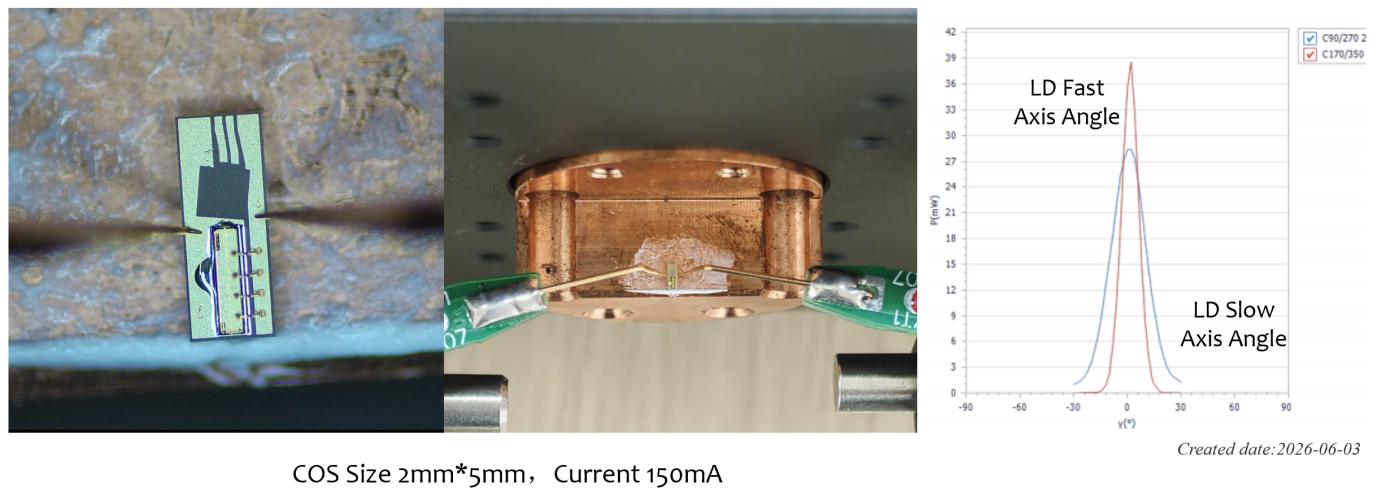
Figure 7: Partially packaged (COS) device testing example
Part 6: Summary of User Value
For Chip Design Houses
Verify rationality of epitaxial structure and waveguide design
Evaluate batch-to-batch consistency
Provide reliable divergence angle datasheet specifications to downstream customers
For Assembly Houses
Rapid incoming chip screening
Evaluate impact of assembly processes on divergence angle
Provide factory test reports for TO-packaged devices
For Optical Transceiver Module Manufacturers / System Integrators
Accurately measure divergence angle to optimize coupling optical design
Evaluate performance differences among suppliers
Establish incoming inspection standards
For Research Laboratories
Multi-parameter correlative analysis (temperature, current, divergence angle, efficiency)
Integrated test platform improves experimental efficiency
Support custom test sequences for exploratory research
For Micro-LED R&D Institutions
Evaluate angular matching of RGB chips of different sizes
Study impact of encapsulation processes on emission angle
Provide data support for color shift optimization
Comprehensive Light-Emitting Device Performance Parameter Characterization
Commercial LD and LED products are typically characterized by key performance indicators in their datasheets. The Brolight BRM-6301 test platform and supporting ecosystem can completely provide measurement and validation of the following specification parameters:
Parameter | Symbol | Brolight Capability |
Center Wavelength | λ₀ | BIM-60/66 series spectrometers: Measure spectral characteristics at different temperatures/currents; analyze wavelength drift |
Continuous Output Power | P_op | BIM-740x/710x series optical power meters: Accurately measure output optical power |
Threshold Current | I_TH | BRM-610X driver controller + OPTIED platform: Automatically sweep P-I-V curves; extract threshold current |
Operating Current | I_op | BRM-610X driver controller: Record operating current at rated output power |
Operating Voltage | V_op | BRM-610X driver controller: Simultaneously measure device voltage |
Slope Efficiency | η | OPTIED platform: Automatically calculate slope efficiency from P-I curve |
Monitor Current | I_pd | BRM-610X driver controller: Configurable PD monitor channel |
Divergence Angle (Parallel Direction) | θ_∥ | BRM-6301 divergence angle analyzer: Full-angle scanning; automatic half-intensity angle output |
Divergence Angle (Perpendicular Direction) | θ_⊥ | BRM-6301 divergence angle analyzer: Full-angle scanning; automatic half-intensity angle output |
Customer Value: The Brolight BRM-6301 test platform is not just a "divergence angle analyzer" – it is a complete test solution covering all key performance parameters of light-emitting devices. From P-I-V curves to spectral characteristics, from divergence angle to temperature dependence – all data is uniformly acquired, correlatively analyzed, and can be exported as a single test report in industry-standard format through the OPTIED platform, ready for use in product datasheet compilation or incoming inspection.
Conclusion
The Brolight BRM-6301 Divergence Angle Analyzer, together with the OPTIED Control & Data Platform and the complete driver, temperature controller, and fixture ecosystem, is more than an instrument for divergence angle characterization of light emitters – it is an integrated photonics test platform that combines driver, temperature control, multi-level fixtures, spectral analysis, optical power measurement, and correlative data analysis.
From bare die to module, from single emitters to Micro-LED fine angular studies, from divergence angle to P-I-V curves, from spectrum-temperature to power-temperature relationships – the Brolight test platform delivers comprehensive characterization across the full spectrum of light-emitting devices, helping you truly "see" the full picture of your devices.
References
1. Wang, Z., et al. "High coupling efficiency wedge-shaped cylindrical lensed fiber for the 2 µm band." Applied Optics, Vol. 64, Issue 15, pp. 4265-4270 (2025).
2. Ma, Z., et al. "Coupling efficiency of laser diode to multimode fiber by graded refractive index lens." Optical Fiber Technology, Vol. 83, 103689 (2024).
3. "Power Enhancement and Spot Homogenization Design for Arrayed Semiconductor Lasers." Micromachines, Vol. 15, Issue 6, 744 (2024). National Institutes of Health (NIH/PMC).
4. Gao, Q., Wang, W., Pang, Y. "Diode-laser transversal pumped coupling technology." Proceedings of SPIE, Vol. 4915, pp. 346-349 (2002).
5. Zhang, H., et al. "The SMILE Effect in the Beam Propagation Direction Affects the Beam Shaping of a Semiconductor Laser Bar Array." Photonics, Vol. 11, Issue 2, 161 (2024). MDPI.
About Brolight
Brolight, an independent brand under A&P Instrument, focuses on the R&D, manufacturing, and integrated solutions of photonics testing equipment and lab instruments. Leveraging A&P Instrument's over 40 years of technological heritage and market expertise in the photonics industry, Brolight precisely addresses the diverse needs of scientific research, industrial inspection, and experimental teaching. With exceptional photonics products and lab instruments, we build a reliable and efficient application foundation for research institutions, industrial enterprises, and educators worldwide.
Contact Us
For more information, technical specifications, or to request a demonstration, please visit our website or contact our sales team. We look forward to supporting your photonics testing needs.
 EN
EN
 jp
jp  ko
ko  fr
fr  de
de  es
es  tr
tr  ru
ru  pt
pt  ar
ar  vi
vi