Introduction
In cutting-edge fields such as photodetector R&D, solar cell characterization, and photocatalysis, researchers often face a common requirement: how can they obtain a stable, high-intensity light source at a single wavelength?
On the one hand, experiments require a broadband light source to provide full-spectrum excitation. On the other hand, a specific monochromatic wavelength must be extracted from that broadband output for accurate measurement of device spectral response, quantum efficiency, or photocatalytic mechanisms in a defined spectral band.
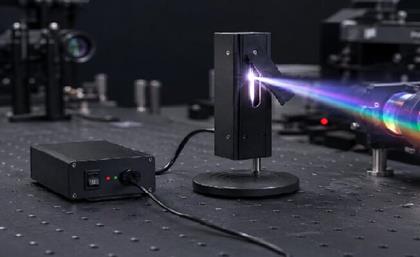
The combination of the Brolight BRS-7001 high-power xenon light source and the BRM-650X grating monochromator is designed precisely for this requirement. This article introduces the typical application scenarios and key selection points for this system.
Part 1: Typical Application Scenarios
Why Choose a Xenon Lamp? Key Differences from Other Light Sources
A xenon arc lamp is widely used in photocatalysis, broadband spectral measurement, and general optoelectronic testing because of its unique spectral characteristics: it provides high-intensity, stable, continuous light output across a broad spectral range.
1. Broadband Continuous Spectrum from UV to NIR
Xenon arc lamp light sources are valued for their broadband spectral output, covering the ultraviolet (UV), visible, and near-infrared (NIR) regions at approximately 250–2000 nm, while providing a smooth continuous spectrum. By contrast, mercury lamps provide discrete line spectra at specific wavelengths, and LEDs provide narrowband spectra; neither can meet the demand for continuous broadband output.
2. High-Power Output Improves Experimental Efficiency
The 250 W high-power design ensures sufficient luminous flux even after the light is dispersed by a monochromator, making the system suitable for weak-signal detection, such as photodetector QE testing.
3. Extract Any Required Monochromatic Wavelength with a Monochromator
When paired with the BRM-650X grating monochromator, any narrowband monochromatic wavelength can be extracted from the xenon lamp’s broadband output. This meets the high wavelength-precision requirements of quantum efficiency testing, spectral response measurement, and related experiments.
Important Note: A Xenon Light Source Is Not a Solar Simulator
The BRS-7001 is a high-power xenon light source. It is not a solar simulator certified to international solar simulator standards.
What the BRS-7001 can be used for:
Excitation light source for photocatalytic reactions, including catalyst activity screening, reaction kinetics, and wavelength-dependence studies
Light source for photodetector spectral response and quantum efficiency testing
Broadband excitation light source for absorption or fluorescence spectroscopy
Relative comparative testing of solar cells, excluding standard calibration
What the BRS-7001 cannot directly replace:
Solar cell efficiency calibration that must comply with IEC 60904-9
Certified testing that requires standard spectral match, irradiance uniformity, and stability
If you require a standard solar simulator, Brolight can recommend suitable product resources.
1.1 Photodetector Quantum Efficiency (QE) Testing
Application requirement:
In photodetector R&D and production, it is necessary to accurately determine the detector’s response at different wavelengths, namely external quantum efficiency (EQE). EQE is a core indicator for evaluating detector performance and device consistency. Testing requires continuously tunable, wavelength-accurate monochromatic light, together with an optical power meter to measure incident optical power and calculate responsivity at each wavelength.
Brolight solution:
System configuration: BRS-7001 + BRM-650X + optical power meter + detector under test
Experimental workflow:
1. The BRS-7001 generates stable broadband white light.
2. The BRM-650X monochromator sequentially outputs monochromatic light at different wavelengths.
3. The monochromatic light irradiates the detector under test, and the response current or voltage is recorded.
4. The incident optical power measured by the optical power meter is used to calculate quantum efficiency at each wavelength.
5. Software automatically scans the wavelength range and generates an EQE curve.
Selection points:
Your Requirement | Recommended Item | Reason |
Conventional visible-light detector (400–1100 nm) | BRM-6501 or BRM-6502 | High efficiency in the visible spectral range |
Near-infrared detector (up to 2200 nm) | BRM-6503 | Three-grating configuration covering the near-infrared region |
1.2 Solar Cell Spectral Response Testing (Relative Measurement)
Application requirement:
During solar cell R&D, researchers need to understand how cell materials respond to different wavelengths, known as spectral response (SR), in order to guide material optimization. This type of relative comparison test does not require the light source to meet solar simulator standards. The BRS-7001 can meet the requirement as a broadband excitation light source.
Brolight solution:
System recommended: BRS-7001 + BRM-650X + lock-in amplifier + BRS-6800 chopper + calibrated reference cell
Experimental workflow:
1. The BRS-7001 generates stable broadband white light.
2. The BRM-650X monochromator outputs monochromatic light at a specific wavelength.
3. The BRS-6800 chopper modulates the continuous monochromatic light into chopped light at a fixed frequency.
4. The solar cell generates a weak photocurrent signal at the same frequency.
5. The lock-in amplifier accurately extracts this weak signal from background noise.
6. The relative EQE is calculated by comparison with a calibrated reference cell.
7. The wavelength is scanned to obtain a relative EQE curve.
Technical note: The core function of a lock-in amplifier is to extract weak signals from strong noise. In EQE testing, the chopper first modulates continuous light into chopped light at a fixed frequency; the lock-in amplifier then uses that reference frequency to accurately extract the photocurrent signal.
Selection reasons: For IEC-compliant solar cell efficiency calibration, a standard solar simulator is recommended. Alternatively, optical feedback control and spatial homogenization components can be added to the BRS-7001 optical path for more advanced setups.
Selection points:
Your Requirement | Recommended Item | Reason |
Relative QE testing of silicon-based cells (300–1100 nm) | BRM-6501 or BRM-6502 | Covers the response range of silicon cells |
Relative QE testing of perovskite or polymer cells | BRM-6501 | Usually 300–900 nm; BRM-6501 is sufficient |
Relative EQE testing of GaAs and other III-V cells | BRM-6503 | Can cover wavelengths up to 1700 nm |
1.3 Photocatalytic Reactions
Application requirement:
Photocatalysis research requires a high-intensity, broadband, and stable excitation light source to drive catalytic reactions. As a high-power xenon light source, the BRS-7001 is mainly used in photocatalysis scenarios that do not require standard solar simulator conditions:
Catalyst activity screening and comparison: comparing the performance of different catalysts under the same illumination conditions
Reaction kinetics research: studying how light intensity and wavelength affect reaction rate
Wavelength-dependence studies: investigating catalytic behavior at specific wavelengths with a monochromator
Teaching and demonstration experiments: demonstrating photochemical and photocatalytic principles
Brolight solution:
1.3.1 Photocatalytic Degradation and Environmental Treatment
Experimental workflow:
1. The BRS-7001 provides high-intensity broadband excitation light to irradiate pollutant solutions in the reactor.
2. Samples are taken at fixed intervals, and changes in pollutant concentration are analyzed using a spectrometer or chromatography.
3. Degradation rate, reaction rate constant, and other kinetic parameters are calculated.
4. Optional: the BRM-650X can be used to study degradation efficiency at different wavelengths.
Selection reasons:
Experiment Type | Recommended Item | Key Requirement |
Conventional degradation experiment/catalyst screening | BRS-7001 free-space output | Optical power >900 mW; stability <5% |
Wavelength–degradation efficiency study | BRS-7001 + BRM-650X | Continuously tunable wavelength |
1.3.2 Photocatalytic Water Splitting for Hydrogen Production and Energy Conversion
Experimental workflow:
1. The BRS-7001 provides high-intensity broadband excitation light to irradiate the photocatalytic reactor containing catalyst and water.
2. Hydrogen production is monitored online using gas chromatography.
3. The hydrogen production rate and quantum efficiency are calculated.
Selection reasons: Hydrogen production experiments have high requirements for light source stability. The BRS-7001 offers light power stability of <5%; it is recommended to use it together with an optical intensity monitoring probe.
1.3.3 Photocatalytic CO₂ Reduction
Experimental workflow:
1. The BRS-7001 provides high-intensity broadband excitation light to irradiate the catalyst and CO₂ in a sealed reactor.
2. Product composition and yield are monitored online using gas chromatography.
3. Selectivity, yield, and stability are evaluated.
Selection reasons: CO₂ reduction requires careful light intensity control, so an optical intensity calibration system is recommended.
Key considerations for photocatalysis experiments:
Light intensity calibration: use a standard power meter to calibrate light intensity, record lamp usage time, and replace aging lamps in time.
Temperature control: use a water-cooled filter to remove infrared radiation and avoid interference caused by thermal effects.
Spectral reporting: a complete report should include incident light intensity, spectral range, illuminated area, and light source-to-reactor distance.
Stability verification: a high-quality xenon lamp should maintain long-term output stability; the BRS-7001 stability is <5%.
1.4 Absorption Spectroscopy
Application requirement:
Absorption spectroscopy is a fundamental method for material composition analysis. By measuring the degree to which a sample absorbs light at different wavelengths, substances can be analyzed qualitatively or quantitatively. Experiments require a continuously tunable monochromatic light source and a stable optical intensity detection system.
Brolight reasons:
System Recommended: BRS-7001 + BRM-650X + sample cell + detector
Experimental workflow:
1. The BRS-7001 generates broadband white light.
2. The BRM-650X monochromator outputs monochromatic light at a specific wavelength.
3. The monochromatic light passes through the sample cell, and the detector measures transmitted light intensity.
4. Absorbance is calculated by comparison with the reference light intensity.
5. The wavelength is scanned to obtain the absorption spectrum.
1.5 Fluorescence Spectroscopy
Application requirement:
Fluorescence spectroscopy is used to detect the fluorescence characteristics of materials and is widely applied in biological labeling, trace substance detection, and other fields. Fluorescence signal intensity is typically only 10⁻⁶ to 10⁻⁸ of the excitation light intensity, making detection much more difficult than absorption spectroscopy. Therefore, a high instantaneous peak-power excitation source is required.
Brolight solution:
High-sensitivity fluorescence spectroscopy requires a pulsed xenon lamp as the excitation source.
Recommended Items: SIM-6205 pulsed xenon lamp + filter + BIM-6002A spectrometer
Experimental workflow:
1. The SIM-6205 pulsed xenon lamp generates high-intensity pulsed light.
2. The excitation light irradiates the sample and generates fluorescence.
3. The fluorescence passes through a filter and is detected by a detector or spectrometer.
4. The fluorescence spectrum is obtained.
Advantages of a pulsed xenon lamp:
Extremely high instantaneous peak power, up to the kW level, effectively exciting weak fluorescence signals
Pulsed operation reduces sample photodegradation
This technical route is adopted by mainstream fluorescence spectrometers
Selection tip:
Experiment Requirement | Recommended Item | Reason |
Conventional absorption spectroscopy | BRS-7001 continuous xenon lamp | Stable continuous output suitable for absorption measurement |
High-sensitivity fluorescence spectroscopy | SIM-6205 pulsed xenon lamp | High instantaneous peak power effectively excites weak fluorescence |
Part 2: Quick Selection Guide
2.1 Which Monochromator Should I Choose?
Core Experimental Requirement | Recommended Item | Key Reason |
Routine measurement in the visible region (400–700 nm) | BRM-6501 | 500 nm blaze; efficiency concentrated in the visible range |
Visible and infrared measurement required at the same time, up to 1100 nm | BRM-6502 | Dual blaze at 500/800 nm; balanced efficiency at both ends |
Near-infrared coverage required up to 2200 nm | BRM-6503 | Three-grating configuration with ultra-broad spectral coverage |
2.2 Should I Choose Free-Space Output or Fiber-Coupled Output?
Application | Recommended Output Method | Reason |
Irradiating a reactor or large-area sample | Free-space output | High power (>900 mW) and adjustable light spot |
Connecting to an integrating sphere or fiber probe | Fiber-coupled output | Plug-and-play setup with a flexible optical path |
Precise light-spot positioning required | Free-space output + aperture | Adjustable light-spot size and shape |
2.3 Quick Reference Table for Recommended Configurations by Application
Application Field | Recommended Item | Key Selection Parameter |
Photodetector QE testing | BRS-7001 + BRM-650X | Wavelength range must match the detector response band |
Solar cell relative QE testing | BRS-7001 + BRM-650X + BRS-6800 + lock-in amplifier | Weak-signal extraction capability |
Photocatalytic degradation / hydrogen production / CO₂ reduction | BRS-7001 free-space output | Optical power >900 mW; stability <5% |
Photocatalytic wavelength-dependence study | BRS-7001 + BRM-650X | Continuously tunable wavelength |
Absorption spectroscopy | BRS-7001 + BRM-650X | Wavelength scanning range and wavelength accuracy |
High-sensitivity fluorescence spectroscopy | SIM-6205 pulsed xenon lamp + BIM-6002A | Instantaneous peak power and pulse frequency |
Part 3: Core Product Specifications and Key Parameters
3.1 BRS-7001 High-Power Xenon Light Source
Parameter | Specification | Selection Focus |
Spectral range | 250–2000 nm | Covers ultraviolet, visible, and near-infrared regions |
Lamp power | 250 W | High power ensures optical flux |
Free-space output power | >900 mW | Key parameter for direct irradiation experiments |
Fiber output power | Total >55 mW (UV >5 mW; visible >25 mW) | Important for fiber-coupled experiments |
Optical power stability | <5% | Key indicator for long-duration experiments |
Lamp life | 800 h | Consumable cost consideration |
Output method | Free-space / fiber-coupled | Choose according to experimental requirements |
3.2 BRM-650X Grating Monochromator
Parameter | BRM-6501 | BRM-6502 | BRM-6503 | Key points |
Grating configuration | 1200 lines, 500 nm blaze | 1200 lines, 500/800 nm dual blaze | 500 nm (1200 lines) + 800 nm (1200 lines) + 1800 nm (600 lines) | The blaze wavelength should be close to the commonly used spectral band |
Wavelength range | 200–1100 nm | 200–1100 nm | 200–2200 nm | Must cover the response range of the device under test |
Wavelength accuracy | ≤±0.5 nm | ≤±0.5 nm | ≤±1 nm | Affects spectral measurement accuracy |
Stray light | <0.0002 | <0.0002 | <0.0002 | Affects signal-to-noise ratio and measurement accuracy |
Electronic shutter | Standard | Standard | Standard | Remote control for convenient automation |
Filter wheel | Optional | Optional | Optional | Suppresses high-order spectral interference |
Part 4: Summary
The combination of the Brolight BRS-7001 high-power xenon light source and the BRM-650X grating monochromator provides a one-stop solution with broad spectral coverage, high optical flux, and precise wavelength tunability for photodetector QE testing, relative solar cell characterization, photocatalysis research, and related applications.
Core Advantage | Description |
Broad spectrum | Xenon lamp (250–2000 nm) plus monochromator (200–2200 nm) provides full UV-to-NIR spectral coverage. |
High optical flux | 250 W high power and >900 mW free-space output ensure the capability to detect weak signals |
Precise wavelength control | Monochromator wavelength accuracy ≤±0.5 nm; supports automatic software scanning |
Flexible configuration | Free-space and fiber output options; multiple models available for different experiments |
Dual-use capability | Works both as a broadband light source and as a tunable monochromatic light source |
About Brolight
Brolight, an independent brand under A&P Instrument, focuses on the R&D, manufacturing, and integrated solutions of photonics testing equipment and lab instruments. Leveraging A&P Instrument's over 40 years of technological heritage and market expertise in the photonics industry, Brolight precisely addresses the diverse needs of scientific research, industrial inspection, and experimental teaching. With exceptional photonics products and lab instruments, we build a reliable and efficient application foundation for research institutions, industrial enterprises, and educators worldwide.
 EN
EN
 jp
jp  ko
ko  fr
fr  de
de  es
es  tr
tr  ru
ru  pt
pt  ar
ar  vi
vi