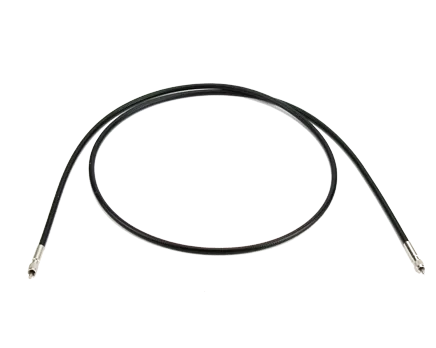
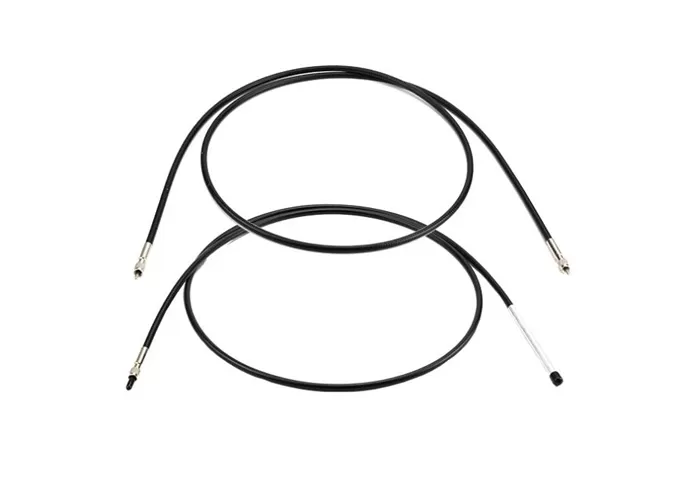
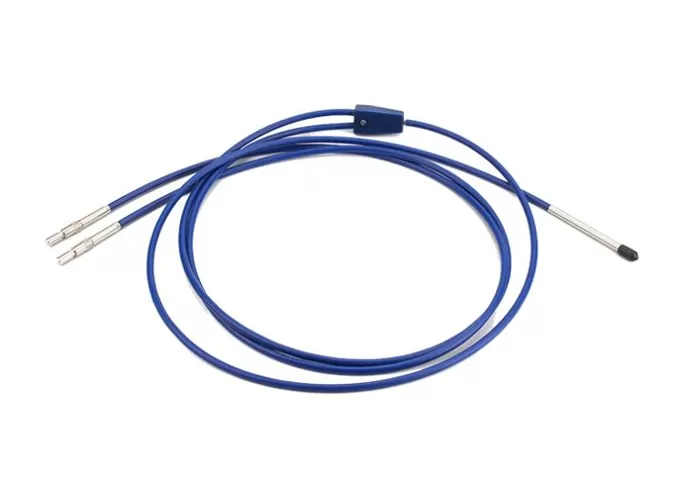
A fiber is a flexible glass or plastic fiber that uses light to transmit data from one end to the other. It consists of a core made of glass or plastic that is surrounded by layers of protective material, such as cladding. The core of the cable is where the data is transmitted as light signals, and the cladding helps to keep the light signals confined within the core. A coating and strength member protect the delicate fiber optic core from damage.
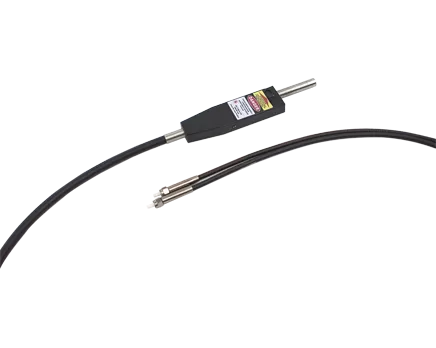
Raman probe is designed for laser-induced Raman spectroscopy applications such as 532nm, 785nm, 830nm, 1064nm. It works with semiconductor lasers and spectrometers, forming a Raman testing system.By equipping different sampling holders, it can be used for different samples such as solid, liquid or powder. The OD6 cut-off optical interference filter can greatly reduce the effect of Rayleigh scattering. The compact structure makes Raman probe easier to measure Raman spectrum in most applications.
1. Core Diameter
The core diameter fundamentally influences how light is transmitted.
Large Cores (e.g., 100um, 200µm): Excellent for high-power industrial laser delivery and applications where easy light coupling is essential. They offer greater alignment tolerances, simplifying connections and reducing costs.
Small Cores (e.g., 25µm, 50µm ): Designed for high-speed, long-distance communication. They provide superior bandwidth and lower signal loss, making them the standard for telecommunications and precise sensing.
The Choice Depends On: The need for high power handling vs. high bandwidth and long-distance signal integrity.
2. Fiber Length
Fiber length is not a one-size-fits-all parameter. A custom length ensures:
Minimized Signal Loss: Eliminates unnecessary excess fiber that can cause attenuation.
Optimized System Layout: Allows for a clean, efficient, and space-saving installation in complex machinery or infrastructure.
Cost Efficiency: You pay only for the length you need.
The Choice Depends On: The exact distance between your light source and your detector or application point.
3. Interface Type
The interface is the critical connection point between your fiber and the rest of your system. We offer customized connector types (e.g., SMA905 / FC / ST and others).
Physical Compatibility: Direct plug-and-play integration with your existing equipment.
Optical Performance: The right connector preserves signal integrity and minimizes back-reflection.
Application-Specific Needs: Sealed connectors for harsh environments or specialized tips for medical devices.
The Choice Depends On: The equipment you are connecting to and the environmental conditions.