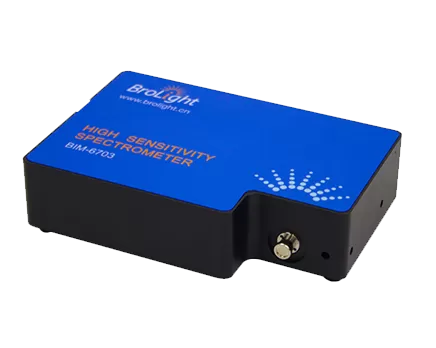
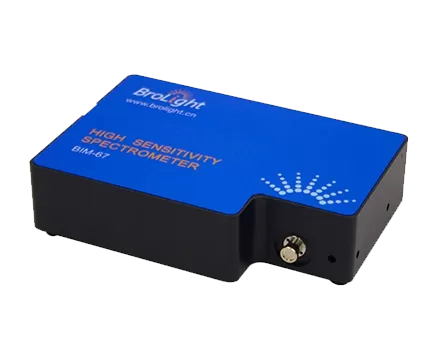
A Raman spectrometer is an analytical instrument among photonics instruments used to measure the Rayleigh scattering effect, which is a type of light scattering that occurs when light interacts with matter. Raman spectrometers are powerful tools for non-destructive analysis and characterization of a wide range of materials, providing valuable insights into their molecular composition and structure.
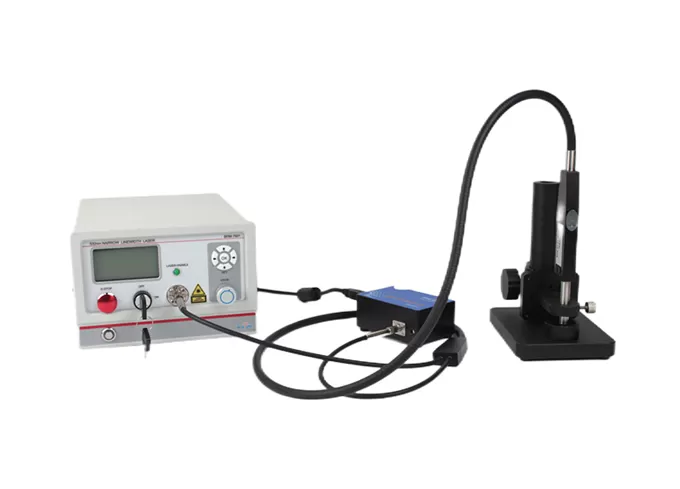
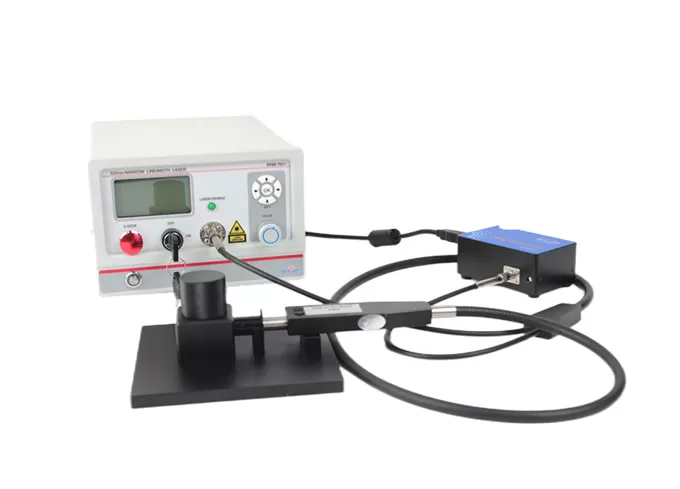
A Raman spectroscopy machine consists of three components: the laser, the spectrometer itself, and the sampling interface. A Raman laser has a narrow linewidth, small form factor, low power consumption, and an extremely stable power and exciting wavelength output. The precision-engineered Raman spectrometer is characterized by a high resolution, low noise, small form factor, and low power consumption. The sampling interface allows for precise, easy, and safe sampling.
 EN
EN
 jp
jp  ko
ko  fr
fr  de
de  es
es  tr
tr  ru
ru  pt
pt  ar
ar  vi
vi